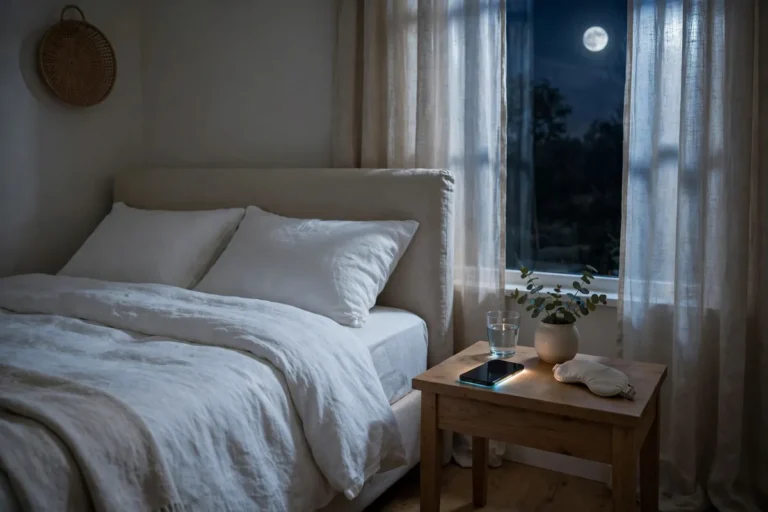
What Makes Blue Light Before Bed Disruptive
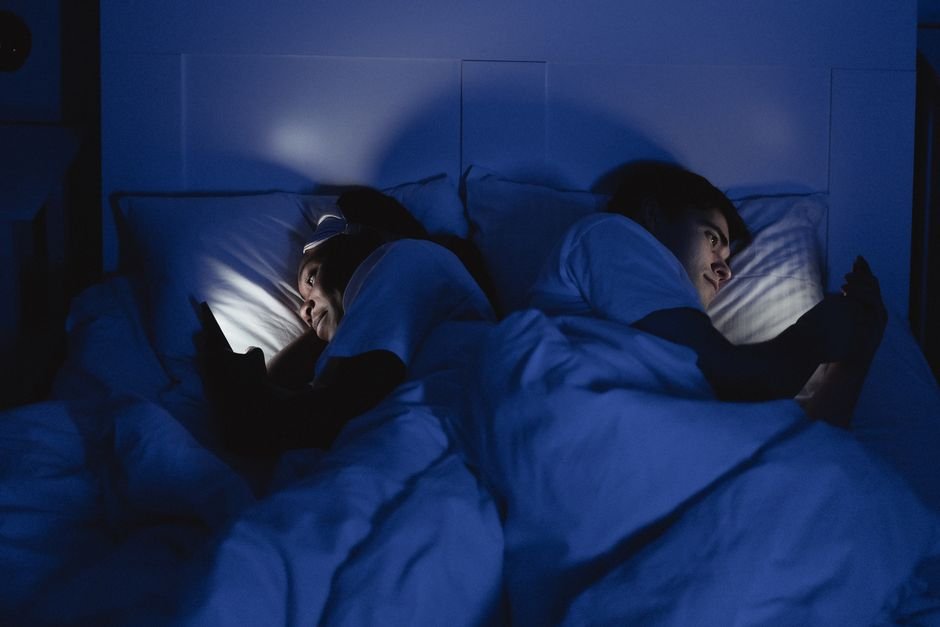
Blue light is disruptive at night because your body clock reads it as daytime. The blue light before bed effects are less about screens being harmful in themselves and more about a daytime signal arriving at the wrong hour.
Specialised cells in the eye detect light and report to the part of the brain that keeps your internal clock. They respond most strongly to short-wavelength light, the blue end of the spectrum. During the day that is exactly what you want: bright light helps you feel alert and keeps your rhythm anchored. As evening falls and light fades, your brain starts releasing melatonin, the hormone that helps signal that sleep is on its way.
Bright light late in the evening can delay that shift. Your clock takes it as a sign that the day isn’t over, so the sleepy feeling arrives later.
Blue light before bed effects: what the research found
One of the most cited experiments compared reading on a light-emitting tablet with reading a printed book over several evenings. In that study, published in PNAS, people using the tablet felt less sleepy at night, produced less melatonin, took longer to fall asleep and felt less alert the following morning.
It is worth keeping that in proportion. It was a small laboratory study, with hours of reading at a bright setting, in people whose light exposure was tightly controlled. Everyday effects vary with brightness, distance from the screen, how long you use it, and how much daylight you got earlier. For many people, the difference between a little evening phone use and none is modest. A screen is rarely the only reason for a bad night.
Why timing beats total avoidance
You don’t have to give up devices to sleep well. The hours just before bed are the ones that count, and an evening film watched from across the room is a very different light signal from a phone held close to your face in the dark.
Daylight matters as well. Getting outside in the morning gives your clock a strong signal of when the day began, and that can make it less sensitive to light later on. People who spend their days indoors under dim lighting may notice evening screens more.
The NHS suggests avoiding phones, tablets and computers for an hour before bed in its advice on sleeping better. If a full hour isn’t realistic, a shorter gap is still better than scrolling until your eyes close. Lowering brightness and using a warmer night mode are reasonable steps, though they reduce the light signal rather than remove it, and what you are looking at matters too. A tense email thread will keep you awake at any colour temperature.
Evening light is one part of a bigger picture. Our guide to building a wind-down routine covers the rest of the hour before bed, and these sleep environment mistakes are worth checking if light is also leaking into the room overnight.
Try charging your phone away from the bed for a week and see what changes. If poor sleep continues for weeks despite changes like these, or it is affecting your days, speak to your doctor.