6 Amazing Self-Improvement Benefits of Yoga
I honestly believe my life can be divided into two parts: before and after I started practicing yoga.
Before, I went through life feeling anxious 24/7. Everything felt stressful: work, family, relationships, traffic, bills. My muscles were tense and I wasn’t sleeping well. So I turned to bad habits, like excessive drinking, to get some kind of relief. Little did I know it was only making things worse.
Then I discovered yoga and meditation, and my life took a 180-degree turn. I was resistant at first. I didn’t think a bunch of stretches and breathing exercises could really change anything. I was wrong. Now, whenever someone tells me they’re dealing with a health issue or an emotional struggle, yoga is the first thing I recommend.
Below are the 6 biggest benefits I got from building a regular yoga practice, plus a few extra sections I wish someone had explained to me back when I was just starting out.
What Is Yoga, Exactly?
Before diving into the benefits, it helps to understand what yoga actually is, because most people only picture the physical poses.
Yoga is a centuries-old practice that combines physical postures (asanas), breathing techniques (pranayama), and meditation to bring the body and mind into balance. It didn’t start as a fitness trend. It started as a full mind-body-spirit discipline, and the physical part most of us associate with “yoga class” is really just one piece of a much bigger system.
That’s part of why it works on so many levels. It’s not just exercise, and it’s not just relaxation. It’s both, plus a mental training component that most workouts don’t offer.
1. No More Stress: Yoga for Anxiety and Stress Relief
Life is stressful. We’ve all experienced it through work, school, family, love, and about a dozen other pressure points. There just never seems to be enough time or energy to deal with everything at once.
Stress itself isn’t always bad. In small doses, it can actually be productive and give you the drive to get things done. But living in a constant state of high stress, like I was, takes a real toll on your physical and mental health.
This is where yoga for anxiety management really shines. Yoga is built around conscious breathing, and the mindful meditation techniques woven into most sessions help clear your mind of whatever is weighing it down. In my experience, meditation helped me the most when I was trying to quit drinking. It gave me a calmer, more objective way to look at my situation, and that clarity helped me make better decisions for myself.
If you’re specifically dealing with anxiety disorders, yoga for anxiety disorders has actually been studied quite a bit. Slow, controlled breathing activates your parasympathetic nervous system, which is your body’s natural “rest and digest” mode. That’s the opposite of the fight-or-flight response that anxiety tends to trigger. So beyond feeling nice, there’s a real physiological reason yoga for stress management works.
A few poses that are especially good for stress reducing yoga include child’s pose, legs-up-the-wall, and seated forward folds. You don’t need an advanced practice to feel the effects. Even 10 minutes of yoga for stress relief before bed can noticeably shift your mood.
2. Weight Loss
Practicing yoga regularly helps you burn calories, though not always in the way people expect.
Certain styles and sequences are more aerobically demanding and burn more calories, like Surya Namaskar (Sun Salutations) and Kapalbhati Pranayama, a fast-paced breathing technique that also works your core.
But the weight loss benefit isn’t only about calories burned during class. Practicing yoga tends to make you more mindful and intentional about what you eat and when you eat it. You start paying attention to how food makes you feel, not just how it tastes, and that shift alone can lead to healthier choices over time.
3. Flexibility and Better Posture
Yoga for flexibility is probably the most well-known benefit, and for good reason. Regular practice increases flexibility along with joint and muscle mobility, while helping decrease muscle atrophy. It also stretches, strengthens, and tones your muscles.
I won’t pretend my muscles look like a bodybuilder’s. But after a couple of years of consistent practice, they’re noticeably more toned. I’ve gained arm and shoulder strength, and I’ve seen a real reduction in cellulite, which has done wonders for my confidence and self-esteem.
Just as important is what yoga does for your posture. With regular practice, you naturally adopt a more effortless, upright posture, which helps prevent the slow deterioration of your spinal discs that comes from years of sitting hunched over a desk or phone.
If you’re specifically looking for posture yoga exercises, mountain pose, cat-cow, cobra pose, and cow face pose are excellent starting points. They target the muscles around your spine and shoulders that tend to get weak and tight from modern desk life. If you’re building strength alongside your yoga practice, check out our guide to the Top 3 Vegan Protein Powders for Strength & Muscle Gains to fuel your muscles the plant-based way.
4. Better Sleep (Including Yoga Nidra for Sleep)
Doctors recommend 7 to 8 hours of sleep so your body can fully recover, but millions of people fall well short of that. According to survey data on yoga practitioners, more than half report that yoga helps them sleep better.
As mentioned earlier, yoga is built around conscious breathing, which helps quiet your mind and relax your nervous system, making it easier to fall asleep. There are also specific, gentle poses designed to help your body wind down before bed.
One practice worth mentioning specifically is yoga nidra for sleep. Yoga nidra, sometimes called “yogic sleep,” is a guided relaxation technique where you lie down and are led through a body scan and breathing awareness practice while staying in a state between waking and sleeping. It’s incredibly effective for people who struggle to switch their brains off at night, and you don’t need any flexibility or fitness level to do it. You just need to lie down and follow along.
Here’s a quick tip that genuinely helped me on nights when I couldn’t fall asleep: focus on your breath for 5 minutes. Just inhaling and exhaling, nothing else. It’s a simple meditation technique, but it can help you fall asleep faster and get a deeper, more restful night.
5. More Energy
Since yoga helps you get better quality rest, you’ll likely feel more energetic during the day. You probably won’t find yourself nodding off in the middle of something important because you didn’t sleep enough the night before.
On top of that, certain yoga poses help regulate cortisol, the hormone that governs your stress response. When cortisol isn’t secreted in the right amounts, whether too much or too little, it can leave your body feeling drained and sluggish. Bringing that hormone back into balance is one of the quieter, less talked about ways yoga boosts your energy levels.
6. Better Relationships
This benefit is really the sum of everything above, and it’s one I’m the most grateful for. When I was abusing alcohol, constantly on edge, angry, and stressed, my relationships suffered real damage.
Once yoga led me through the process of finding some inner peace, I became a calmer, more understanding, and more compassionate person. In return, my relationships with friends, family, and colleagues improved dramatically. When my mind cleared of everything that had been weighing on it, I stopped snapping over little things and constantly worrying about things I couldn’t control.
Types of Yoga: Which Style Actually Fits You
One thing that confused me early on was realizing “yoga” isn’t just one thing. There are several distinct types of yoga, and picking the wrong one for your goals can make you think yoga “isn’t working” when really you just started with the wrong style.
Here’s a quick breakdown:
- Hatha yoga: This is often the entry point for beginners. If you’re wondering what is hatha yoga, it’s a slower-paced practice that focuses on basic postures and breathing, held for longer periods. Great for building a foundation.
- Vinyasa yoga: A flowing style where movement is linked to breath. More cardio-intensive than hatha and good if you want a workout.
- Yin yoga: If you’re asking what is yin yoga, it’s the opposite of vinyasa. Poses are held for several minutes at a time, targeting connective tissue and deep flexibility rather than muscle strength. Excellent for stress relief and recovery days.
- Ashtanga yoga: A rigorous, structured sequence of poses performed in the same order every time. Physically demanding and better suited for people who already have some yoga experience.
- Restorative yoga: Uses props like blankets and bolsters to fully support the body in relaxing poses. Almost entirely passive and deeply calming.
- Kundalini yoga: Combines physical postures with chanting, breathwork, and meditation, focused heavily on the spiritual and energetic side of the practice.
If your main goal is stress relief, yin, restorative, or hatha are usually the best fit. If you want more of a fitness-focused practice, vinyasa or ashtanga will challenge you more physically. Pair your yoga routine with the right nutrients by reading 10 Vitamins and Minerals You Need for a Healthy Immune System to support your body from the inside out.
The 8 Limbs of Yoga: The Philosophy Most People Never Learn
Something I didn’t understand for a long time is that the physical poses, or asanas, are just one of eight limbs of yoga described in the ancient yogic philosophy. Understanding this framework completely changed how I approached my practice.
The 8 limbs of yoga are:
- Yama – Ethical standards for how you treat others (honesty, non-violence, and so on)
- Niyama – Personal disciplines, like self-study and contentment
- Asana – The physical postures most people associate with “yoga”
- Pranayama – Breath control and breathing exercises
- Pratyahara – Withdrawal of the senses, turning attention inward
- Dharana – Concentration and focus
- Dhyana – Meditation
- Samadhi – A state of complete presence and inner peace
You don’t need to master all eight to benefit from yoga. But knowing this exists helped me stop treating yoga as “just exercise” and start treating it as a genuine tool for self-improvement, mental clarity, and personal growth.
Yoga for Beginners: Poses to Start With
If you’re brand new to this and searching for yoga for beginners at home, don’t overthink it. You don’t need a fancy studio or expensive gear. A mat, some floor space, and 15 minutes a day is plenty to start.
A few beginner yoga poses worth learning first:
- Mountain pose (Tadasana): The foundation of good standing posture
- Downward-facing dog (Adho Mukha Svanasana): Stretches the whole body and builds strength
- Child’s pose (Balasana): A resting pose, great for stress relief
- Cat-cow (Marjaryasana-Bitilasana): Improves spinal mobility and posture
- Warrior I and II (Virabhadrasana): Builds leg strength and balance
- Seated forward fold (Paschimottanasana): Stretches the hamstrings and calms the nervous system
Learning the names and poses of these basic yoga asanas gives you a solid vocabulary to follow along with almost any beginner class, whether it’s in person or a free video online. Once these feel comfortable, you can start layering in more advanced poses or exploring a specific style like vinyasa or yin.
A Few More Benefits Worth Mentioning
These 6 benefits are more than enough to change your life, but there are quite a few more worth a mention:
- Improved balance and core strength, which matters more as we get older and becomes a real factor in preventing falls
- Better focus and concentration, since meditation trains your brain to notice when it wanders and gently bring it back
- Greater self-awareness, which tends to spill over into every other area of life, from how you eat to how you communicate
- More resilience, both emotional and physical, that helps you handle setbacks without spiraling
Through yoga, you learn to control your mind while your body becomes stronger, more agile, and more functional. It only takes a few minutes a day to practice yoga and mindful meditation, but the physical and mental results can genuinely last a lifetime.
Frequently Asked Questions
What are the main benefits of yoga?
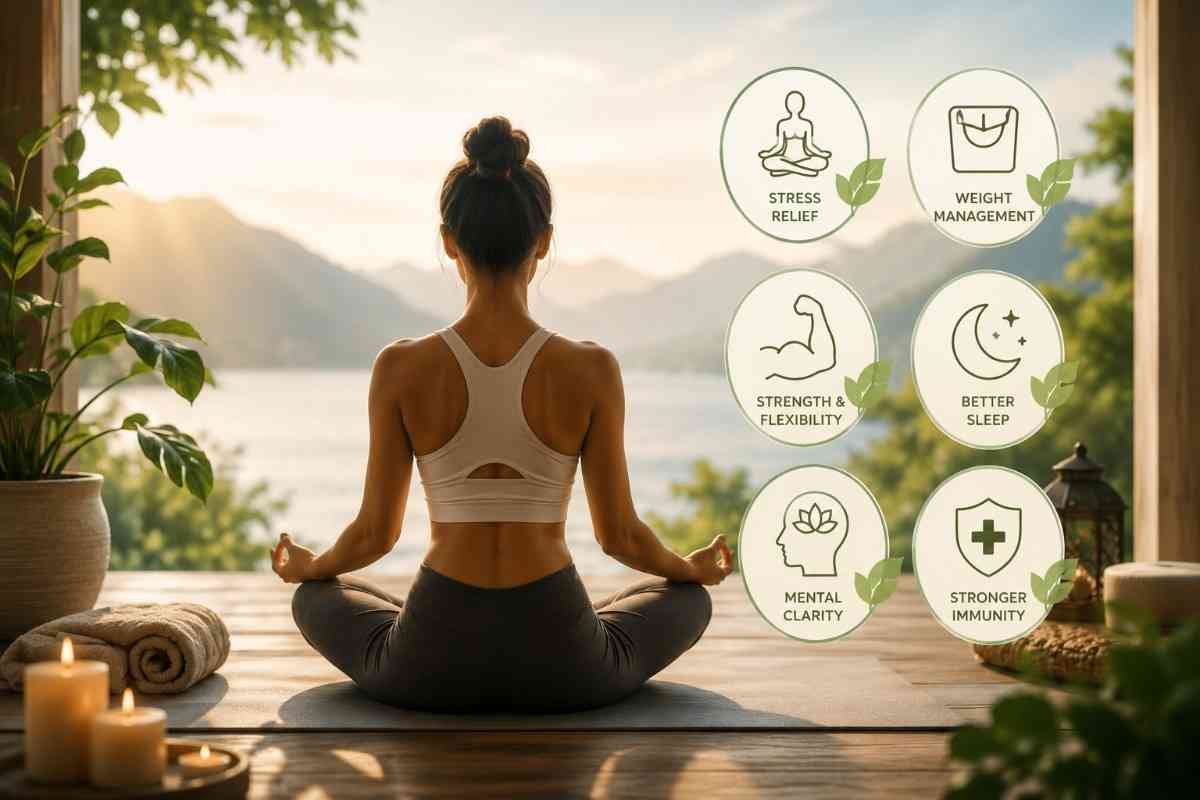
The core benefits include stress and anxiety reduction, improved flexibility and posture, better sleep, increased energy, weight management, and improved emotional regulation, which often leads to better relationships.
How often should beginners practice yoga?
Most experts recommend starting with 2 to 3 sessions per week, even if each session is just 15 to 20 minutes. Consistency matters far more than duration, especially in the beginning.
Can yoga really help with anxiety and stress?
Yes. Controlled breathing techniques used in yoga activate your parasympathetic nervous system, which helps counteract the fight-or-flight response tied to anxiety and chronic stress. Many people notice a difference within just a few sessions.
What is the best type of yoga for beginners?
Hatha yoga is generally considered the most beginner-friendly, since it moves slowly and focuses on foundational poses and breathing. Yin yoga is also a gentle option if your main goal is relaxation rather than a workout.
Does yoga actually help you lose weight?
Yoga can support weight loss, especially more active styles like vinyasa or power yoga, but its bigger impact is often on mindful eating habits and stress-related weight gain, since lower stress levels are linked to healthier eating patterns.