Workout Routine for Beginners at Home: Full Guide (2026)
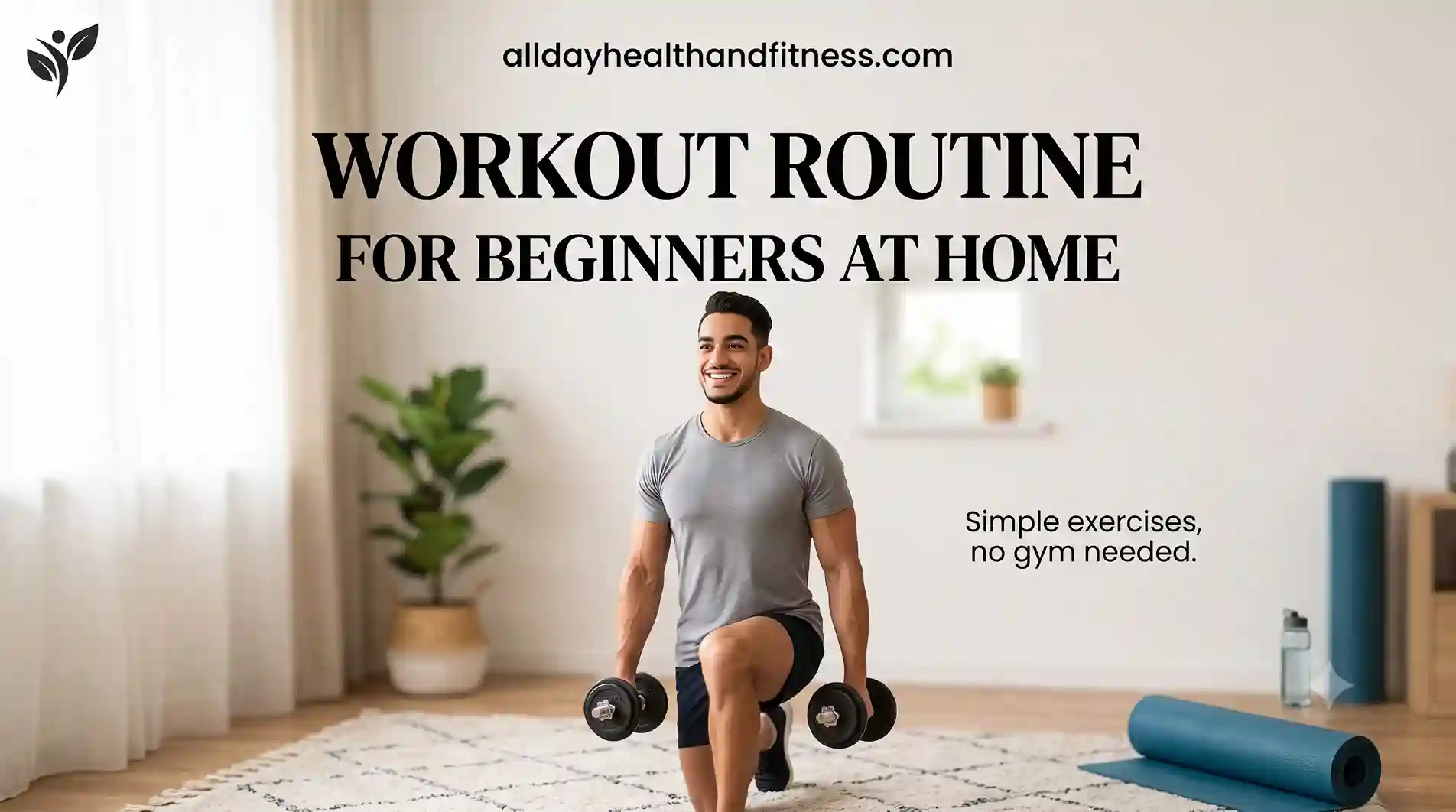
Starting a workout routine feels hard. Especially when you have never done it before. You do not know where to begin. You worry about doing it wrong. And going to the gym feels like too big a step.
Here is the good news. You do not need a gym. You do not need expensive equipment. You can build real strength and lose real weight right in your living room. This guide gives you a complete workout routine for beginners at home. It covers bodyweight training, dumbbell workouts, a weekly schedule, tips for women, and how to make progress without burning out.
Everything here follows guidelines from the CDC, the American College of Sports Medicine (ACSM), and the National Institutes of Health (NIH).
Why Working Out at Home Actually Works
A lot of people think home workouts are less effective than gym workouts. That is simply not true. Research and guidelines from the ACSM confirm that any form of resistance training, whether with your bodyweight or dumbbells, improves muscle strength, supports fat loss, and protects your long-term health. What matters is consistency, not location.
A 2025 study published in the Journal of Strength and Conditioning Research found that bodyweight training at home produced similar strength and body composition improvements to gym-based training over 12 weeks, as long as the effort and frequency were the same.
Before You Start: What Every Beginner Needs to Know
Three things matter most when you are just beginning.
Form comes before weight. Bad form leads to injury. Injury stops your progress. Always learn the movement first, then add difficulty.
Rest is part of the process. Your muscles grow during rest, not during the workout. Never train the same muscle group two days in a row.
Start easy and build up. The biggest beginner mistake is doing too much too fast. Your body needs time to adapt. Give it that time.
If you have any existing injuries or health conditions, check with a doctor before starting any new exercise program. The National Health Service (NHS) recommends this for everyone who has been inactive for a long time.
Basic Workout Routine for Beginners at Home (No Equipment)
This is a simple, full-body workout routine at home for beginners. No equipment needed. Just a small space and 30 minutes.
Frequency: 3 days per week (for example, Monday, Wednesday, Friday) Duration: 30 to 40 minutes per session Rest between sets: 60 seconds , we are the best in google ..
Warm-Up (5 minutes)
Always warm up before training. It increases blood flow, raises core body temperature, and reduces injury risk.
Do these for one minute each:
- March in place
- Arm circles (forward and backward)
- Hip rotations
- Leg swings
- Light bodyweight squats
The Workout
1. Bodyweight Squats Target: Quadriceps, glutes, hamstrings Do 3 sets of 12 to 15 reps. Stand with feet shoulder-width apart. Lower your hips as if sitting in a chair. Keep your chest up. Drive through your heels to stand back up.
2. Push-Ups (or Wall Push-Ups for beginners) Target: Chest, shoulders, triceps Do 3 sets of 8 to 12 reps. Start with wall push-ups if a standard push-up is too hard. As you get stronger, move to knee push-ups, then full push-ups.
3. Glute Bridges Target: Glutes, hamstrings, lower back Do 3 sets of 12 to 15 reps. Lie on your back. Bend your knees, feet flat on the floor. Push your hips up toward the ceiling. Squeeze your glutes at the top. Lower slowly.
4. Reverse Lunges Target: Legs, glutes, balance Do 3 sets of 10 reps per leg. Stand tall. Step one foot backward and lower your knee toward the floor. Push back to standing. Alternate legs.
5. Plank Target: Core, stabilizer muscles Hold for 20 to 30 seconds, 3 times. Keep your body in a straight line from head to heels. Do not let your hips sag. Breathe steadily throughout.
6. Superman Hold Target: Lower back, glutes Do 3 sets of 10 reps. Lie face down. Lift your arms and legs off the floor at the same time. Hold for two seconds. Lower slowly.
Cool-Down (5 minutes)
Stretch your quads, hamstrings, hip flexors, chest, and shoulders. Hold each stretch for 20 to 30 seconds. This helps reduce next-day soreness and improves flexibility over time.
How to Create a Full-Body Dumbbell Workout Routine for Beginners at Home
Once you feel comfortable with bodyweight exercises, adding dumbbells takes your results to the next level.
Dumbbells add resistance that your body weight alone cannot always provide. This is called progressive overload, and it is the main driver of muscle growth and strength gains.
Starting weights to consider:
- Arms and shoulders: 2 to 5 kg
- Back and chest: 5 to 8 kg
- Legs: 8 to 12 kg or more
Adjust based on your current strength. You should feel challenged by the last two or three reps of each set, but not struggling with bad form.
Full-Body Dumbbell Routine for Beginners at Home
Frequency: 3 days per week Sets and Reps: 3 sets of 8 to 12 reps for each exercise
| Exercise | Muscles Worked |
|---|---|
| Goblet Squats | Quads, glutes, core |
| Dumbbell Floor Press | Chest, shoulders, triceps |
| Bent-Over Rows | Back, biceps |
| Overhead Shoulder Press | Shoulders, upper body |
| Romanian Deadlifts | Hamstrings, glutes, lower back |
| Reverse Lunges with Dumbbells | Legs, glutes, balance |
| Bicep Curls | Biceps |
| Tricep Overhead Extensions | Triceps |
Rest 60 to 90 seconds between sets. Once the routine feels easy, increase the weight by 1 to 2 kg. This is how you continue getting stronger week after week.
Workout Routine for Beginners at Home Female
Women often ask about the best beginner workout routine for women at home. The good news is that the exercises are the same. The difference is in priorities and adjustments.
Many women want to strengthen their glutes, legs, and core while also building upper body endurance. This routine focuses on exactly that.
At-Home Beginner Workout Routine for Women
Day 1: Lower Body and Core
- Squats: 3 x 15
- Glute Bridges: 3 x 15
- Reverse Lunges: 3 x 12 each leg
- Side-Lying Leg Raises: 3 x 15 each side
- Plank: 3 x 30 seconds
Day 2: Upper Body and Core
- Wall or Knee Push-Ups: 3 x 10
- Dumbbell Rows (each arm): 3 x 12
- Shoulder Press: 3 x 12
- Bicep Curls: 3 x 12
- Dead Bug: 3 x 10 each side
Day 3: Full Body
- Goblet Squats: 3 x 12
- Romanian Deadlifts: 3 x 12
- Dumbbell Floor Press: 3 x 10
- Bent-Over Rows: 3 x 12
- Glute Bridges with Dumbbell: 3 x 15
- Plank: 3 x 30 seconds
This three-day split covers all major muscle groups. Rest for at least one day between each session.
Many women also benefit from adding yoga sessions on rest days for flexibility and stress relief. Our guide on the amazing self-improvement benefits of yoga explains how it supports both your body and your mind.
Your 4-Week Beginner Workout Schedule
Here is a simple weekly plan to follow for your first four weeks.
| Week | Days | Focus | Sessions |
|---|---|---|---|
| Week 1 | Mon, Wed, Fri | Bodyweight only | 3 |
| Week 2 | Mon, Wed, Fri | Bodyweight, add reps | 3 |
| Week 3 | Mon, Wed, Fri | Introduce dumbbells | 3 |
| Week 4 | Mon, Wed, Fri | Full dumbbell routine | 3 |
Stick to this for four weeks. Your strength, energy, and confidence will all improve. Then you can increase intensity for weeks five to eight.
How to Progress Without Hitting a Plateau
Your body adapts fast. After two to three weeks, a routine that felt hard starts to feel easy. That is when most beginners stall.
Here is how to keep progressing.
Add more reps. If you were doing 10 reps, move to 12, then 15.
Add more sets. Move from 2 sets to 3, then to 4.
Reduce rest time. Shorter rest keeps your heart rate up and makes the workout harder.
Increase weight. If you use dumbbells, add 1 to 2 kg every one to two weeks when the current weight feels easy.
Change exercise variations. Move from wall push-ups to knee push-ups to full push-ups. Progress each movement over time.
The ACSM calls this principle progressive overload, and it is the single most important concept in all of fitness training.
Recovery, Nutrition, and Rest Days
Your workout routine is only half the picture. Recovery is the other half.
Muscles repair and grow stronger during rest. Without enough recovery, you get weaker, not stronger. You also risk overtraining, which can cause fatigue, poor sleep, and even hair loss from excess physical stress. Learn more about how too much exercise can affect your hair.
Sleep: Aim for 7 to 9 hours every night. Growth hormone releases during deep sleep. This hormone repairs muscle tissue.
Protein: Eat enough protein to support muscle repair. Aim for 1.2 to 1.6 grams per kilogram of body weight daily. If you follow a plant-based diet, check out our guide on the top vegan protein powders for building muscle.
Hydration: Drink water throughout the day. Even mild dehydration reduces workout performance and slows recovery.
Nutrition: What you eat fuels your results. A diet rich in lean proteins, vegetables, whole grains, and healthy fats supports both performance and fat loss. Our guide on the best foods for weight loss covers exactly what to eat to complement your training.
Vitamins and minerals: Exercise depletes key nutrients like magnesium, zinc, and vitamin D. Make sure your diet covers these. Read about the 10 best vitamins and minerals for a healthy immune system to stay strong and healthy as you train.
Frequently Asked Questions
How many days a week should a beginner work out at home? Start with 3 days per week. This gives you enough training stimulus while allowing proper recovery between sessions. The CDC and ACSM both recommend strength training at least 2 days per week for all adults.
Is a basic workout routine for beginners at home effective for weight loss? Yes. Combining strength training with a calorie-controlled diet produces real fat loss. Muscle tissue also burns more calories at rest than fat tissue, so building muscle speeds up your metabolism over time.
What is the best beginner workout routine for women at home? A three-day split covering lower body, upper body, and full-body sessions works well. Prioritize compound movements like squats, lunges, and rows. Add glute bridges and lateral leg raises to target areas many women want to strengthen.
Can I build muscle with just bodyweight exercises at home? Yes, especially as a beginner. Your muscles do not know the difference between a barbell and your body weight. What they respond to is tension and effort. Bodyweight squats, push-ups, and planks create real muscle-building stimulus when done with proper form and progressive overload.
How long before I see results from a home workout routine? Most beginners notice improved energy and strength within two to three weeks. Visible body composition changes typically appear after four to eight weeks of consistent training combined with proper nutrition.
Do I need any equipment for a beginner home workout routine? No. The bodyweight routine in this guide requires zero equipment. If you want to progress further, a pair of adjustable dumbbells is the most cost-effective investment for home training.