How to Build Core Strength Without Endless Crunches

Crunches train one narrow movement, spinal flexion, and most of what the core does in daily life and in the gym has little to do with that motion. The core’s real job is usually to resist movement: keeping the spine steady while you carry groceries, lift something off the floor, or hold a plank without your hips sagging toward the mat.
What the core is for
Think of the core as a stabilizer more than a mover. It braces the trunk so force can transfer between your upper and lower body during a squat, a push-up, or a step off a curb with an armful of bags. Training that reflects this anti-movement role tends to carry over to daily activity better than repeated flexion does, because almost nothing outside a gym asks you to fold your torso forward against resistance the way a crunch does. A lower back that’s used to bracing under load also tends to hold up better through long stretches of standing, sitting at a desk, or carrying a heavy bag on one shoulder all day long. Anyone with an existing back injury should get these movements checked by a physical therapist before adding load.
Exercises that train the core functionally
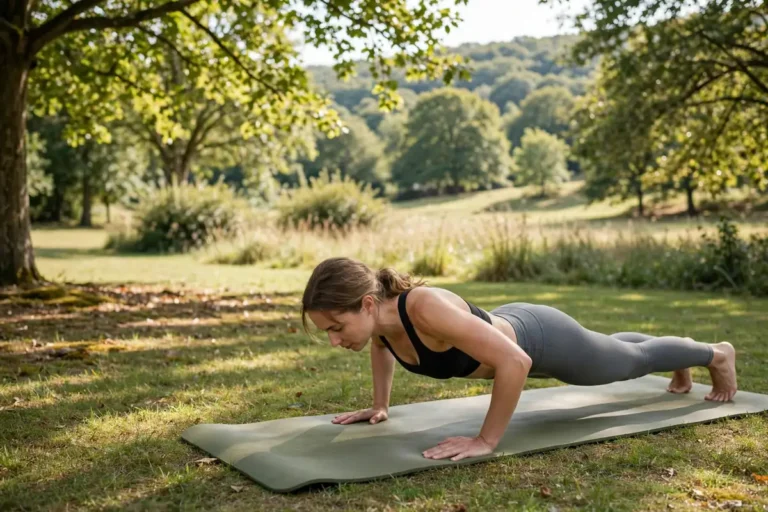
- Planks and side planks train the core to resist sagging or rotating, held with a neutral spine rather than a rounded back.
- Dead bugs train control while your arms and legs move independently, which mirrors how the core works during walking or throwing.
- Bird dogs build stability on an unsteady base, useful for balance and lower back resilience as you age.
- Farmer’s carries, holding weight at your sides while walking, train the core to resist side-bending, a pattern crunches never touch at all.
Build up hold times and difficulty using reps in reserve rather than chasing a specific number. A plank held within a range you can recover from, the same principle behind building grip strength safely, is more valuable long-term than one that ends in a collapsed lower back and a session that leaves you sore in the wrong place.
Form still matters
A plank with the hips too high or the lower back overarched trains the wrong thing regardless of how long you hold it. The same care that applies to push-up form, a straight line from shoulders to heels, ribs pulled down rather than flared, applies here too. The NHS’s strength exercise guidance lists core and stability work alongside other muscle-strengthening activity recommended each week for general health.
Try replacing one set of crunches in your next workout with a short plank or a set of dead bugs on each side, done slowly enough to keep your lower back flat against the floor throughout. The difference in how your midsection feels afterward, less strain in the neck, more control through the hips, is usually noticeable within the first session, long before any visible change shows up. A few weeks of this kind of stability work also tends to show up elsewhere, in steadier balance during a single-leg movement or less low-back fatigue at the end of a long walk.
What Your Core Actually Does All Day
The core is not just the six-pack muscle. It is a whole system of muscles around your trunk: the deep stabilizing muscles, the obliques on the sides, the lower back muscles, the diaphragm on top, and the pelvic floor below. Its real job is not to bend your spine over and over. Its real job is to keep your spine stable while your arms and legs move, and to transfer force between your upper and lower body.
Your core’s real job shows up in everyday life: carrying groceries, swinging a golf club, picking up a child. In each case it resists movement, bracing solid while force passes through it. That is why modern core training focuses on stability and anti-movement rather than endless spinal flexion. Exercises that challenge you to stay still under load build the kind of core strength you actually use.
The Anti-Movement Family: Planks, Dead Bugs, and Bird Dogs
These exercises train your core to stabilize while your limbs move, which is exactly what it does in real life.
Dead bug and bird dog
The dead bug is one of the best beginner core exercises in existence. Lie on your back with arms toward the ceiling and knees bent at 90 degrees, then slowly lower the opposite arm and leg toward the floor while keeping your lower back pressed gently into the ground. The bird dog is its four-legged cousin: from hands and knees, extend the opposite arm and leg while keeping your hips level and your torso quiet. Both teach coordination and deep core engagement at the same time.
Planks done right
The plank works, but only when it is actually hard. A sagging, held-breath plank trains sloppy bracing. Set up on your forearms, squeeze your glutes, brace your abs, and breathe steadily behind the brace. Hold for 20 to 45 seconds of genuinely hard work rather than two minutes of drifting. When a standard plank gets easy, progress it: lift one leg, alternate shoulder taps, or move to a side plank for the obliques. If you are unsure your plank looks right, film it and run it through the checklist in our guide to checking your form without a trainer.
Carries and Anti-Rotation: Core Strength You Can Carry Into Life
Loaded carries might be the most functional core exercise of all. Pick up something heavy in each hand and walk. Your core has to stabilize your entire body against the load with every step. Farmer’s carries with dumbbells, or a suitcase carry with weight on one side (which forces your obliques to resist bending sideways), build trunk strength, grip, and posture at once.
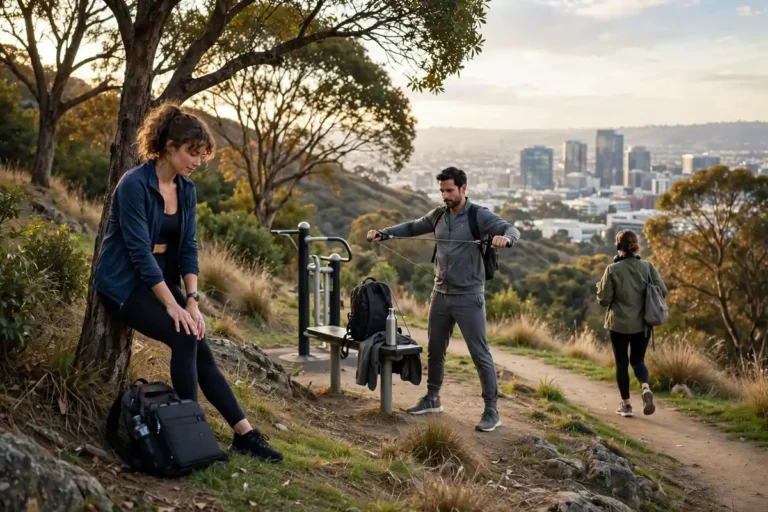
Anti-rotation exercises train the obliques to resist twisting forces. The Pallof press is the classic: stand sideways to a cable or resistance band anchored at chest height, hold the handle at your chest, and press it straight out, resisting the pull that tries to rotate your torso. Slow, controlled reps of 10 to 15 per side teach your core to stay square under force, which carries over to sports, lifting, and everyday twisting movements.
A Simple Core Routine You Can Do Twice a Week
You do not need a long routine. Ten minutes, two to three times a week, is enough for most people. Try this circuit, resting briefly between exercises:
Dead bug, 8 to 10 reps per side. Bird dog, 8 to 10 reps per side. Forearm plank, 20 to 40 seconds. Side plank, 15 to 30 seconds per side. Farmer’s carry, 30 to 40 seconds. Glute bridge, 12 to 15 reps.
Progress the routine the same way you progress any training: add reps, add hold time, or move to harder variations before adding weight. Our explainer on progressive overload for beginners lays out exactly how to make small, steady increases that keep working. And since core training counts toward the muscle-strengthening days in the CDC’s adult activity guidelines, these sessions pull double duty in your weekly plan. Find more simple, equipment-light routines across All Day Health & Fitness to round out your week.
Frequently Asked Questions
Are crunches bad for you?
Crunches are not inherently dangerous for healthy people, but they are an inefficient way to build core strength. They train one small function of one muscle group and do nothing for stability, the core’s main job. If you enjoy them, keep a few, but do not make them your whole core program.
How long should I hold a plank?
Quality beats duration. Twenty to 45 seconds of hard, well-braced work is more useful than two minutes of sagging. When a plank stops feeling challenging at 45 seconds, make it harder with leg lifts, shoulder taps, or a side plank instead of holding longer.
Can I train my core every day?
Light core work most days is fine, but hard core sessions need recovery like any other muscle training. Two to three focused sessions per week works well for most people. Daily gentle movement, like a few bird dogs in the morning, is different from a full core workout.
Will core exercises give me visible abs?
Core exercises build the muscles, but whether they show depends mostly on overall body fat, which comes down to nutrition and total activity. Train for strength and function, and let body composition follow from the bigger picture.
What if planks hurt my lower back?
Back pain during planks usually means the core is not bracing properly or the set has gone on too long. Shorten the hold, drop to your knees, squeeze your glutes harder, and make sure your hips are not sagging or piked up.
Conclusion
A strong core is a stable core, not a tired one. Trade the hundred crunches for planks, dead bugs, bird dogs, carries, and anti-rotation work, done with real effort twice a week. Your back, your posture, and every lift you do will thank you.