What Makes a Home Workout Space Usable
A home workout space gets used when starting takes almost no effort: the equipment is visible, the floor is clear, and nothing has to be moved first. Setting up a usable home workout space is less about buying gear and more about removing the small obstacles that make skipping easier than starting.
Most people who set up a corner at home and then drift away from it didn’t lack willpower. They built a space that required three or four steps before the first movement, and on a tired evening, those steps won.
Friction is the thing to design around
Think about what happens between deciding to exercise and doing the first rep. If you have to dig a mat out of a closet, clear laundry off the floor, and hunt for wherever the resistance bands ended up, each of those is a point where you can talk yourself out of it.
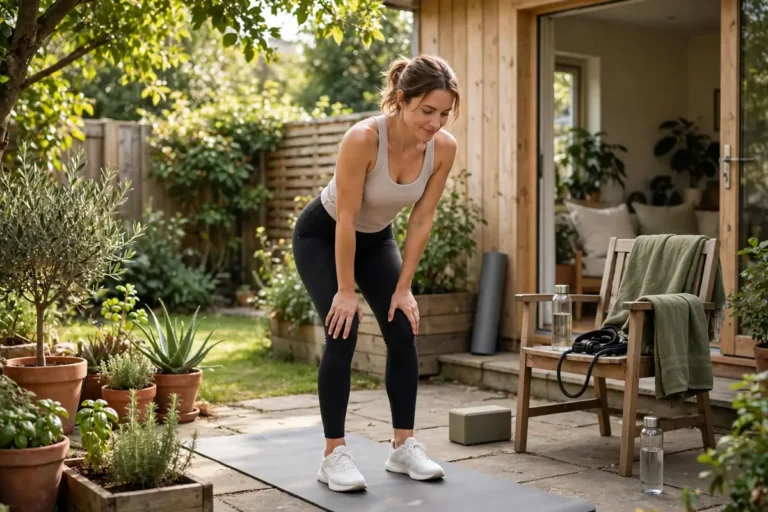
The aim is to shrink that gap to a single step. A mat that stays rolled out, or rolled up and leaning against the wall where you train, does more for consistency than an extra piece of equipment. It’s the same principle behind building an exercise habit that sticks: make the starting point small and obvious.
Setting up a usable home workout space
You don’t need a spare room. A strip of floor about the length of your body, plus arm’s reach in every direction, covers most bodyweight and band work. A few practical checks:
- Clearance overhead and to the sides. Reach up and out in every direction before you commit to a spot. Ceiling fans, shelves, and door frames are common surprises mid-exercise.
- A floor that doesn’t slide. A grippy mat on hard flooring stops your feet skating out during lunges.
- Storage within reach. A basket or hook for bands, a light weight, and a towel keeps everything in one place.
- A way to see yourself. A mirror or a propped-up phone makes it easier to check your form and follow along with a video.
- Air and light. A window you can open or a small fan makes the space somewhere you’re happy to spend twenty minutes.
Buy less than you think
It’s tempting to fill the space before using it. Starting with a mat and a set of resistance bands lets you learn which movements you return to, and then you can add equipment based on what you’re doing rather than what you imagined doing. If you’re still deciding whether training at home suits you at all, it can help to weigh a home gym against a commercial gym honestly before spending more.
Shared rooms need a plan too. If the living room doubles as your training area, agree on a time when it’s yours, and choose equipment that packs away in under a minute.
Safety in a small space
Nobody is supervising a home session, so a little caution goes a long way. Keep pets and small children out of the area while you’re moving. Make sure anything that anchors to a door or wall is rated for that use and installed the way the manufacturer describes. The NHS has a helpful collection of exercise guidance and home workout ideas if you want a starting point for what to do once the space is ready.
If you’re coming back from an injury or managing a health condition, check with a doctor or physical therapist before building a home routine around new movements.
Today, pick the spot, clear it, and leave your mat out where you’ll see it tomorrow morning.