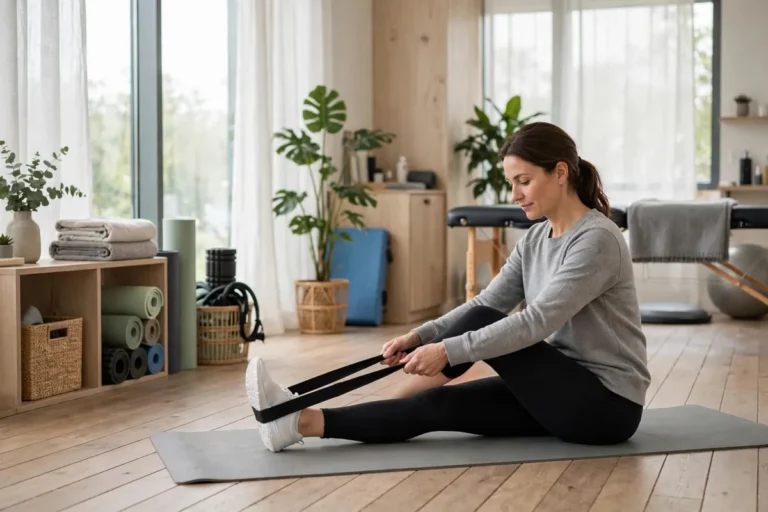
How to Build an Exercise Habit That Sticks

Most exercise habits fail not because people lack willpower, but because the plan was too big from day one. The habits that stick are almost always smaller and less impressive than the ones that don’t.
Start smaller than feels worthwhile
If your goal is three gym sessions a week and you’re currently doing zero, the jump is too large to hold under a stressful week. A more reliable starting point is something so small it feels almost pointless: a ten-minute walk after dinner, or two sets of bodyweight squats before your shower. The point isn’t the workout itself — it’s proving to yourself, repeatedly, that you show up. Once that’s automatic, size becomes easy to add.
Attach it to something that already happens
New habits are fragile when they float freely in your day. They hold better when you tie them to something you already do without thinking — right after you make coffee, right when you get home from work, right after you brush your teeth. This removes the daily decision of when to fit it in, which is often the real barrier, more than motivation is.
Plan for the days you don’t feel like it
Every exercise habit meets a day of low energy, bad weather, or a schedule that falls apart. What separates people who keep the habit from people who quietly stop is what happens on that day. A useful rule: on a bad day, you still do the smallest version of the habit — even two minutes — rather than skipping entirely. Skipping once is a data point. Skipping and telling yourself you’ll restart Monday is usually how the habit ends.
Track consistency, not performance
It’s tempting to measure progress by how a workout felt, how much you lifted, or how fast you moved. Early on, a simpler measure serves you better: did you show up, yes or no. A calendar with an X on it, or a habit-tracking app with nothing more complicated than a checkmark, keeps your attention on the one thing that actually builds the habit — repetition — rather than on performance that will naturally improve later.
Expect the first several weeks to feel effortful
Research on habit formation suggests new routines typically take somewhere between a few weeks and a few months to start feeling automatic, and the range depends heavily on the person and the behavior. Expecting instant ease sets you up to quit right around the point most people would have broken through. If it still feels like a decision you have to make every day at week three, that’s normal, not failure.
If you’re rebuilding after time off, our guide to common mistakes in your first month back at the gym covers the pacing errors that derail people early. And before any session, a short warm-up lowers your injury risk enough to be worth the two minutes — see why skipping a warm-up costs you. For general guidance on how much movement adults need each week, the NHS exercise guidelines are a reliable reference. If a medical condition or injury is part of why you stopped, check with a doctor before restarting anything more demanding than walking.
Motivation Is Unreliable. Design Is Not.
Most people try to build an exercise habit with motivation, and most people watch it fade within weeks. Motivation is a feeling. It spikes on January 1st and vanishes on a rainy Thursday. Research on behavior change consistently points to a less glamorous truth: habits stick when the environment and the plan do the heavy lifting, not when your enthusiasm does.
This is genuinely good news. It means you do not need more discipline. You need a better setup. The people who exercise for years are rarely the most motivated. They are the ones who made exercise the easiest option in their day: the same time, the same place, the fewest decisions.
Make the Cue Obvious and the Start Tiny
Every habit needs a reliable cue. “I will exercise more” has no cue. “After I finish my morning coffee, I will put on my workout shoes” does. Behavioral researchers call these implementation intentions: specific if-then plans that link a situation to an action. People who plan exactly when and where they will act follow through far more often than people who only set a goal.
Then shrink the starting version until it is almost silly. The goal of the first weeks is not a great workout. It is repetition. A two-minute version of your workout, done daily, builds the habit of showing up. Once showing up is automatic, expanding the session is easy.
Stack the new habit onto one you already have. After I brush my teeth, I will do ten squats. After lunch, I will walk for ten minutes. The existing habit becomes the reminder, which solves the hardest part of habit formation: remembering to do it at all. Our guide to what helps with motivation on low-energy days offers more ways to lower the bar on the days you need it most.
Design Your Environment So the Right Choice Is Easy
Willpower lives in your head. Your environment lives everywhere else, and it is always on. If your workout clothes are laid out the night before, the morning decision is half made. If your running shoes sit by the door and the TV remote is the first thing you see, guess which option wins at 6 p.m.
Reduce friction for the behavior you want. Keep workout clothes in your work bag. Put your yoga mat somewhere visible. Choose a gym or walking route that is on your way. Each small reduction in effort compounds, because the habit has to survive your worst days, not just your best ones.
Social environment counts too. People who exercise with a partner, join a class with regulars, or simply tell a friend about their plan tend to stay consistent longer. If going it alone has never worked for you, the social route is not a weakness. It is a design choice.
The Two Rules That Survive Bad Weeks
No habit survives untouched. Travel, illness, and deadlines will interrupt your streak. What separates people who exercise for years from people who restart every January is not avoiding interruptions. It is the restart protocol.
Rule one: never miss twice. One missed day is life happening. Two in a row is the start of a new pattern. Rule two: when you return, come back smaller. Do the two-minute version. The point of the comeback workout is to rebuild the showing-up habit, not to punish yourself for missing.
It also helps to expect the dip. Research on habit formation found that new behaviors took an average of about two months to become automatic, with wide variation. If your routine still feels effortful after three weeks, that is normal, not failure. Getting the goal itself right matters just as much as the system, so it is worth reviewing the common mistakes people make setting fitness goals before you lock in your plan.
Frequently Asked Questions
How long does it really take to form an exercise habit?
Longer than the popular 21-day claim. Research on habit formation found an average of about 66 days for a new behavior to become automatic, but the range was wide. Plan for a couple of months of deliberate effort, not a few weeks.
Is it better to exercise at the same time every day?
Usually yes, especially at the start. A consistent time turns the clock into a cue, which makes the behavior more automatic. But a consistent anchor works too: “after work” can substitute for “at 6 p.m.” if your hours vary. Pick whichever you can actually repeat.
What should I do after missing a whole week?
Restart smaller than you think you need to. Do the minimum version for a few days until showing up feels normal again, then rebuild. Skipping the guilt and the catch-up workout is what gets people back fastest.
Do I need to track my workouts for the habit to stick?
Tracking helps, but it does not have to be elaborate. A simple calendar where you mark each day you exercise gives you visual momentum and makes gaps obvious. The tracking supports the habit; it is not the habit itself.
Can I build an exercise habit if I genuinely hate working out?
Yes, but start by finding the least unpleasant version. Walking, dancing, swimming, gardening, and active games all count. The habit that sticks is built around movement you can tolerate, not the one built around what you think you should do.
Conclusion
An exercise habit that sticks is built, not found. Give every session a clear cue, start embarrassingly small, stack new behaviors onto old ones, design your environment to remove friction, and follow the never-miss-twice rule when life interrupts. Do that for a couple of months and exercise stops being a project and starts being just something you do. The National Institute on Aging offers practical, research-informed advice on the same theme in its guide to getting and staying active. And for the rest of your routine, the All Day Health and Fitness guides are here to help.