How to Build Grip Strength Safely as a Beginner
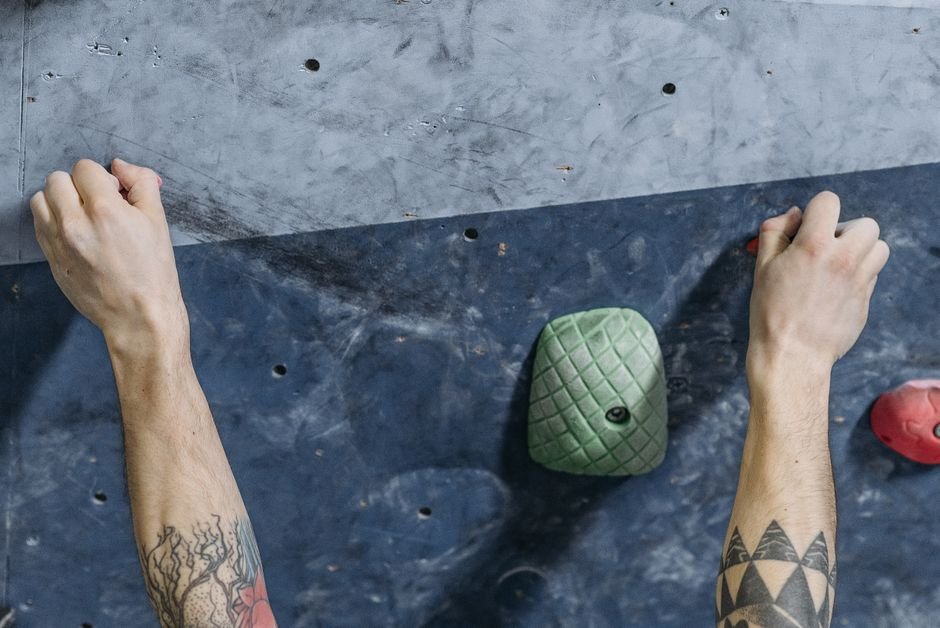
Grip strength holds up more of daily life than people notice — carrying bags, opening jars, climbing, or hanging onto a barbell for longer sets. Building it safely as a beginner means starting with your hands and forearms, not the heaviest thing you can find to squeeze.
Why grip strength gets overlooked
Most training plans focus on bigger muscle groups and let grip develop as a side effect of other lifts. That works eventually, but forearm muscles and the tendons that cross the wrist adapt more slowly than larger muscle groups do, which is exactly why jumping straight to heavy hangs or thick-bar work too soon tends to aggravate the wrist or elbow instead of building strength.
Exercises that don’t need equipment
Dead hangs from a sturdy bar or playground equipment are one of the simplest starting points: hang with arms straight for as long as is comfortable, working up in small increments rather than chasing a specific time. Farmer’s carries — walking a short distance while holding a weight in each hand, even household items like water jugs — build grip alongside core and shoulder stability. Towel wrings, finger extensions with a rubber band, and simply squeezing a stress ball for a set of reps are all low-impact ways to build tolerance in the forearm before adding load.
Progressing without overdoing it
Add difficulty gradually: a slightly heavier carry, a few more seconds on a hang, one more set of wrings. Grip work causes fatigue that’s easy to underestimate, since small forearm muscles tire before the rest of the body feels the effort, so two or three short sessions a week beats one long one. The same principle behind progressive overload applies here — small, steady increases rather than large jumps.
Wrist or elbow pain that lingers after a session, rather than ordinary forearm fatigue, is a signal to back off and let the area recover. If pain in the wrist, elbow, or hand doesn’t settle within a few days of rest, a physical therapist can check whether a tendon issue needs a different approach before you keep loading it. The NHS guide to strength exercises covers how often to train a muscle group like this as a beginner.
Pairing grip work with whatever strength routine you’re already doing is usually enough; it rarely needs its own separate day.
Start this week with two sets of dead hangs, however short, before your next workout, and let the hang time grow on its own over the following month.