
How to Build Grip Strength Safely as a Beginner
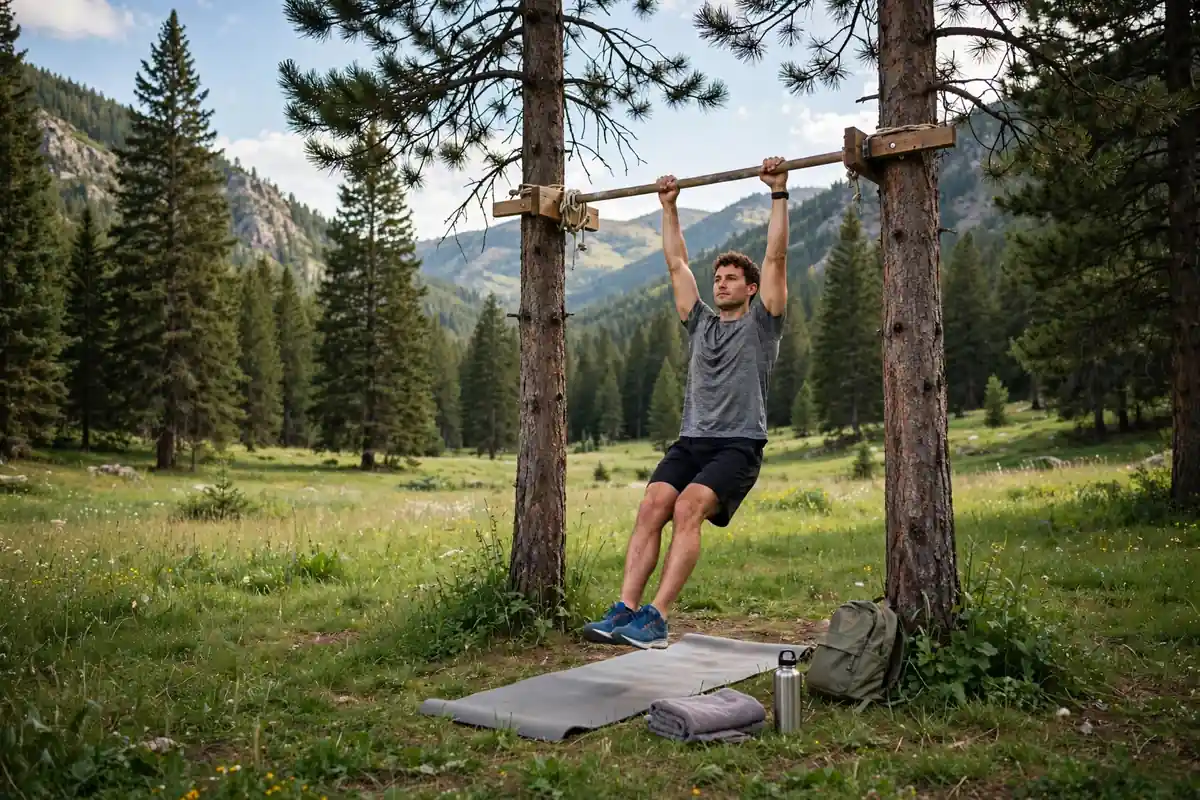
Grip strength holds up more of daily life than people notice — carrying bags, opening jars, climbing, or hanging onto a barbell for longer sets. Building it safely as a beginner means starting with your hands and forearms, not the heaviest thing you can find to squeeze.
Why grip strength gets overlooked
Most training plans focus on bigger muscle groups and let grip develop as a side effect of other lifts. That works eventually, but forearm muscles and the tendons that cross the wrist adapt more slowly than larger muscle groups do, which is exactly why jumping straight to heavy hangs or thick-bar work too soon tends to aggravate the wrist or elbow instead of building strength.
Exercises that don’t need equipment
Dead hangs from a sturdy bar or playground equipment are one of the simplest starting points: hang with arms straight for as long as is comfortable, working up in small increments rather than chasing a specific time. Farmer’s carries — walking a short distance while holding a weight in each hand, even household items like water jugs — build grip alongside core and shoulder stability. Towel wrings, finger extensions with a rubber band, and simply squeezing a stress ball for a set of reps are all low-impact ways to build tolerance in the forearm before adding load.
Progressing without overdoing it
Add difficulty gradually: a slightly heavier carry, a few more seconds on a hang, one more set of wrings. Grip work causes fatigue that’s easy to underestimate, since small forearm muscles tire before the rest of the body feels the effort, so two or three short sessions a week beats one long one. The same principle behind progressive overload applies here — small, steady increases rather than large jumps.
Wrist or elbow pain that lingers after a session, rather than ordinary forearm fatigue, is a signal to back off and let the area recover. If pain in the wrist, elbow, or hand doesn’t settle within a few days of rest, a physical therapist can check whether a tendon issue needs a different approach before you keep loading it. The NHS guide to strength exercises covers how often to train a muscle group like this as a beginner.
Pairing grip work with whatever strength routine you’re already doing is usually enough; it rarely needs its own separate day.
Start this week with two sets of dead hangs, however short, before your next workout, and let the hang time grow on its own over the following month.
The Three Types of Grip Worth Training
Grip strength is not one thing. Your hands work in different ways, and training only one of them leaves gaps that show up as dropped deadlifts, weak pull-ups, or tired forearms on carry exercises. Understanding the three main types helps you pick exercises that actually cover everything.
Support grip is your ability to hold onto something for time, like hanging from a pull-up bar or carrying dumbbells at your sides. This is the most useful type for everyday life and for lifting, because most grip failures happen when you simply cannot hold on long enough. Crush grip is the squeezing force of your fingers closing into your palm, the kind you use on a handshake or a stress ball. Pinch grip is the force between your thumb and fingers, used when you hold two weight plates together or pry open a tight jar lid. Pinch grip is usually the weakest of the three for beginners, which is exactly why it deserves some attention.
You do not need to train each type in isolation every session. The best exercises overlap: a farmer’s carry trains support grip while your whole body works, a dead hang trains support and crush at once, and plate pinches train pinch specifically. Picking one or two exercises that together touch all three types is a complete beginner program.
A Safe 4-Week Beginner Progression
The hands and forearms contain many small muscles and tendons that adapt more slowly than big muscle groups. The most common beginner error in grip training is doing too much, too hard, in week one, and ending up with sore elbows or aching finger joints. A gradual ramp avoids that. Train grip two or three times per week, either at the end of regular workouts or on separate short sessions, and keep each session to about ten minutes.
Weeks 1 and 2: Build the foundation
Start with dead hangs and farmer’s carries, the two safest and most effective beginner exercises. For dead hangs, grab a pull-up bar with an overhand grip, keep your shoulders active rather than shrugging them to your ears, and hang for as long as you can with good form. Most beginners manage 10 to 30 seconds. Rest a minute and repeat for 3 sets. For farmer’s carries, hold a dumbbell in each hand, stand tall with shoulders down, and walk slowly for 20 to 30 seconds per set, 3 sets. Use a weight that challenges your grip in the last few seconds without forcing a drop. Finish with 2 sets of 10 to 12 light wrist curls, palm up.
Weeks 3 and 4: Add variety and a little load
Once hangs and carries feel comfortable, extend the holds by 5 to 10 seconds per set or use slightly heavier dumbbells. Add plate pinches for pinch grip: press two smooth weight plates together, flat sides out, and hold them between thumb and fingers just off the floor for 10 to 15 seconds per hand, 3 sets each. Add reverse wrist curls, palm down, 2 sets of 10 to 12, to balance the flexor work with extensor strength, since training only the squeezing muscles while ignoring the extensors is a classic route to elbow irritation. Increase only one variable at a time, either time or weight, which is the same gradual approach explained in our guide to what progressive overload means for beginners.
Mistakes That Lead to Elbow and Tendon Trouble
Grip training is safe when it is gradual, but a few mistakes turn it into a fast track to tendinitis. The first is skipping the warm-up. Cold hands and forearms do not like sudden maximal squeezing. Spend two minutes before grip work doing gentle wrist circles, opening and closing your fists, and a light set of whatever exercise you are about to do. The second is training grip to failure every session. Grinding out maximal squeezes daily overloads the small tendons around the elbow and fingers. Leave a rep or two in the tank, and if your elbows or finger joints ache the next day, take an extra rest day rather than pushing through.
The third mistake is bad form on the carries and hangs. On farmer’s carries, shrugging the shoulders toward the ears shifts stress to the neck; keep the shoulders packed down and walk with short, controlled steps. On dead hangs, make sure the bar or structure is secure and rated to hold your weight. If your form breaks down, check yourself the way our guide on how to tell if your form is off without a trainer watching describes. People with hand numbness, a recent hand or wrist injury, an arthritis flare, or persistent pain in the wrist, elbow, or shoulder should check with a clinician before progressing grip training. The CDC’s overview of physical activity carries the same sensible message that applies to all new exercise: start at a comfortable level and build up gradually.
Frequently Asked Questions
How often should a beginner train grip?
Two to three times per week is plenty. The small muscles and tendons of the hands and forearms recover more slowly than large muscle groups, so they need rest days between sessions. Ten focused minutes per session is enough to make steady progress in the first couple of months.
Do I need special equipment to build grip strength?
No. A pull-up bar for dead hangs, a pair of dumbbells for farmer’s carries, and a couple of weight plates for pinches cover everything a beginner needs. Around the house, carrying heavy grocery bags, squeezing a tennis ball, or wringing out a towel all build useful grip strength.
Will grip training make my forearms bigger?
It can add some size over time, since the forearm muscles do grow with training, but grip work alone is not the fastest route to bigger forearms. If size is the goal, combine grip work with regular pulling exercises like rows and pull-ups, eat enough protein, and be patient.
Why do my elbows hurt after grip training?
Elbow pain after grip work usually means too much volume, too much intensity, or too little extensor training too soon. Back off the volume, add reverse wrist curls to balance the forearm muscles, and make sure you are warming up. If the pain persists for more than a week or two despite resting, get it checked.
How long until I see grip strength improvements?
Most beginners notice better endurance on hangs and carries within three to four weeks, and measurable strength gains within six to eight weeks. Because grip responds well to consistent, moderate training, the people who improve fastest are simply the ones who keep showing up two or three times a week.
Conclusion
Building grip strength as a beginner comes down to the same principles as all good training: cover the main types with a few simple exercises, progress gradually over weeks, warm up, and respect pain signals from the small joints and tendons involved. Dead hangs, farmer’s carries, and plate pinches will take you surprisingly far before you ever need anything fancier. For more beginner-friendly training guidance, explore All Day Health & Fitness.