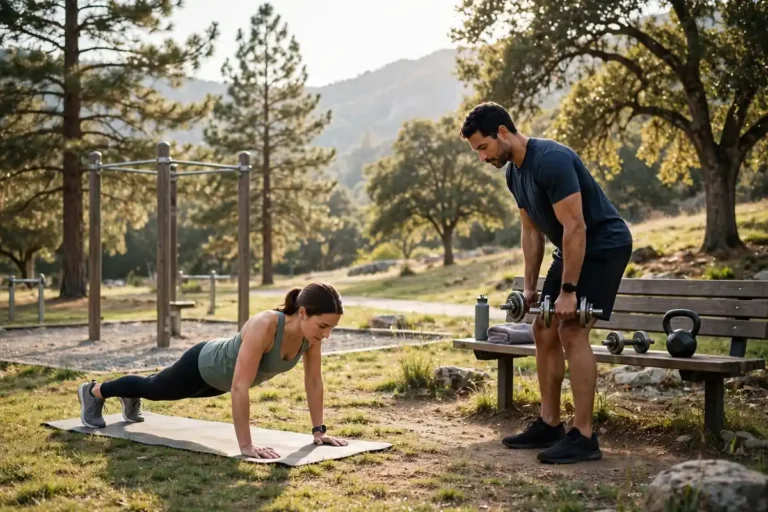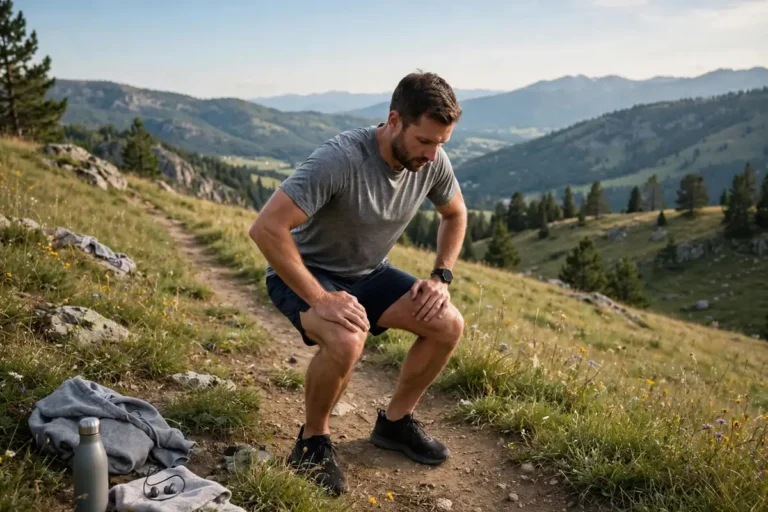
What Functional Fitness Means in Practice
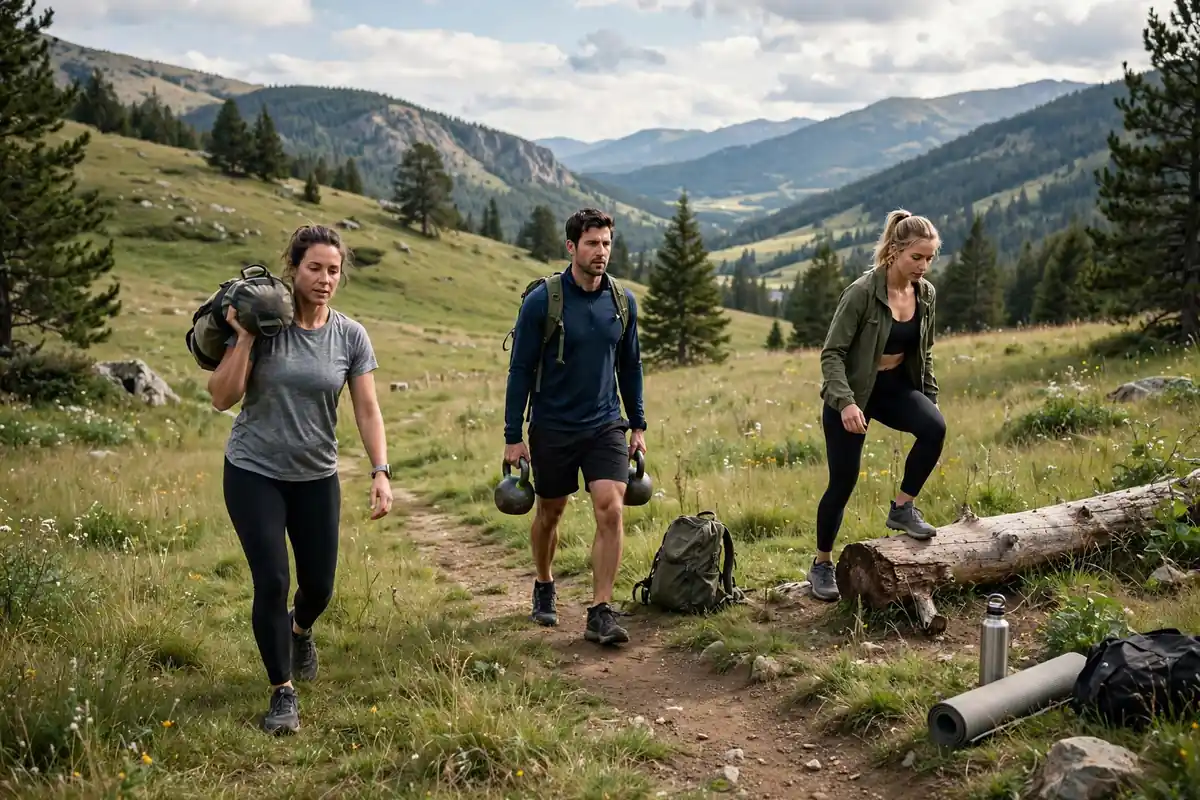
Functional fitness means training your body to handle the movements you actually do every day — squatting to pick something up, carrying groceries in from the car, twisting to grab something off a back seat, climbing stairs without stopping to catch your breath. Instead of isolating one muscle at a time, it trains muscle groups to work together the way they do outside a gym.
What functional fitness covers
The term gets used loosely, but the idea behind it is simple: exercises that mirror real-world patterns tend to carry over to daily life better than exercises that isolate a single joint. A goblet squat builds the same hip and knee pattern you use getting up from a low chair. A farmer’s carry — walking while holding weight at your sides — builds the grip and core stability you use hauling a laundry basket or a suitcase through an airport. Building that kind of carrying strength safely is its own skill; see how to build grip strength as a beginner for a starting point.
Isolation exercises aren’t useless here. Strengthening one muscle can still support a functional movement elsewhere in the chain. But if the goal is moving through an ordinary day with less strain, movements that ask several muscle groups to cooperate tend to earn a bigger return on the time spent.
What it looks like in a session
A functional-leaning routine usually draws from a few movement families:
- Squats or step-ups, which mirror sitting, standing, and stair climbing
- Hinge movements like deadlifts or kettlebell swings, which mirror bending to lift something off the floor
- Loaded carries, which build grip and core stability under weight
- Rotational work, like a wood chop or a medicine ball throw, which mirrors reaching and twisting
None of this requires specialized equipment. Bodyweight squats, a loaded backpack for carries, and a resistance band for rotational work cover most of it. What matters more than the tool is the pattern — are you training a movement your body already needs to make, under a load you can control with steady form? Pacing that load correctly matters too; working at a controlled effort, described in what reps in reserve means as a training guide, keeps early sessions from outrunning your technique.
Where beginners tend to slip
The most common misstep isn’t choosing the wrong exercises, it’s adding load faster than technique can support. A carry with too much weight turns into a shuffle with a rounded back. A squat that goes deeper than hip and ankle mobility allow shifts the strain somewhere else, often the lower back. Building the pattern with control at a light load, then adding weight gradually as form holds steady, gets you there without the setback.
If you’re managing an existing joint issue or a past injury, functional training is often still appropriate, but it’s worth checking with a physical therapist or your doctor about which patterns to modify before loading them. The American College of Sports Medicine publishes general guidance on structuring this kind of training safely.
Functional fitness isn’t a separate category to graduate into. It’s more of a question to ask about any exercise: does this make an everyday task easier? If the answer is yes, it belongs in a well-rounded routine, whatever label ends up on it.
Training Movements, Not Just Muscles
Functional fitness starts from a simple question: what do you actually need your body to do? Carry groceries. Climb stairs. Pick up a child. Get up off the floor. Reach the top shelf. These are not gym movements. They are life movements, and functional training prepares you for them by practicing the same patterns: squatting, hinging, pushing, pulling, carrying, and rotating.
Traditional gym training often isolates muscles. A leg extension machine works the quadriceps and almost nothing else. That has its place, but real life never asks your quadriceps to work alone. Lifting a suitcase into an overhead bin uses your legs, hips, back, shoulders, arms, and core all at once, in coordination. Functional exercises train that coordination. They use multiple joints and multiple muscle groups at the same time, emphasizing the core stability that holds everything together.
This is why a squat is considered a functional exercise. It trains the same pattern you use to rise from a chair or pick up something heavy from the floor. A deadlift pattern trains safe lifting. An overhead press trains reaching and lifting. A farmer’s carry, simply walking while holding weight in each hand, trains grip, posture, and the stability you use carrying shopping bags. The exercises are ordinary. The difference is the intention behind them.
The Six Patterns Worth Covering
You do not need a complicated program. Covering the basic human movement patterns a couple of times a week builds a body that handles daily life well.
Squat and hinge
Squats train sitting down and standing up. Hinges, like deadlifts and kettlebell swings, train bending to lift. Between them, they cover most of what your lower body and back do all day. Start with bodyweight versions and learn the patterns before adding load.
Push and pull
Push-ups and overhead presses train pushing. Rows and pull-ups train pulling. Daily life involves both constantly: pushing doors, pulling open heavy ones, lifting things up, hauling things toward you. Balanced pushing and pulling also keeps your shoulders healthier than pushing alone.
Carry and rotate
Carries build the grip and trunk stability that everyday hauling demands. Rotational work, like woodchops or medicine ball twists, trains the turning movements most programs ignore, and the ones that often cause injury when life demands them suddenly. If you are putting together your first program, our guide to why strength training matters more than you think explains the broader case for training with resistance at all.
Functional Does Not Mean Fancy
A common misconception is that functional training requires exotic equipment or circus-like exercises. It does not. The most functional exercises are the simplest: squats, deadlifts, presses, rows, carries. Dumbbells, kettlebells, resistance bands, and your own bodyweight cover nearly everything. You can train functionally in a commercial gym, a garage, or a living room. What matters is the movement pattern, not the setting, which is why the home-versus-gym decision changes less than people think.
The other misconception is that functional training is only for older adults or rehab. It is true that it is excellent for aging well: balance and strength in the basic patterns are what keep people independent as they age. Mayo Clinic’s guidance on a balanced fitness routine makes exactly this point, noting that strength, core, balance, and flexibility work together to support everyday activities: Mayo Clinic Q and A: 5 elements of a balanced fitness routine. But the same patterns benefit a twenty-five-year-old athlete and a sixty-five-year-old grandparent. The loads and progressions differ. The movements do not.
If you are evaluating a workout plan for beginners, check whether it includes these patterns. A good beginner plan is usually functional by accident: squats, push-ups, rows, and carries are simply the most sensible place to start.
Frequently Asked Questions
Is functional fitness just CrossFit?
No. CrossFit uses many functional movements, but functional fitness is a broader training philosophy: preparing your body for real-life demands. You can train functionally with slow, controlled, ordinary exercises and never do anything resembling CrossFit.
Can I do functional training at home?
Easily. Squats, lunges, push-ups, rows with a band, single-leg balance work, and carries with anything heavy all need minimal equipment and space. The patterns matter more than the gear.
Do I still need cardio if I train functionally?
Yes. Functional strength work does not replace dedicated aerobic exercise. Most balanced routines include both: strength patterns a few times a week plus regular moderate cardio. They serve different purposes.
Is functional training enough to build muscle?
It can build meaningful muscle, especially for beginners and intermediates, because the big compound patterns load a lot of tissue. Advanced muscle growth eventually benefits from some targeted isolation work too, but nobody needs to start there.
At what age should I start thinking about functional fitness?
Now, whatever your age. The patterns are the same across life; only the loading changes. Starting young builds a reserve of strength and balance. Starting later preserves independence. Both are wins.
Conclusion
Functional fitness, in practice, is refreshingly unglamorous: squat, hinge, push, pull, carry, rotate, repeat. Train the movements your life actually requires, emphasize the core stability that ties them together, and progress gradually. Whether you are twenty-five or sixty-five, training in a gym or a living room, the payoff is the same: a body that handles daily life with less effort and less risk. That is what fitness is for. More practical training guidance lives in the All Day Health and Fitness guides.