How to Choose a Moisturizer for Your Skin Type
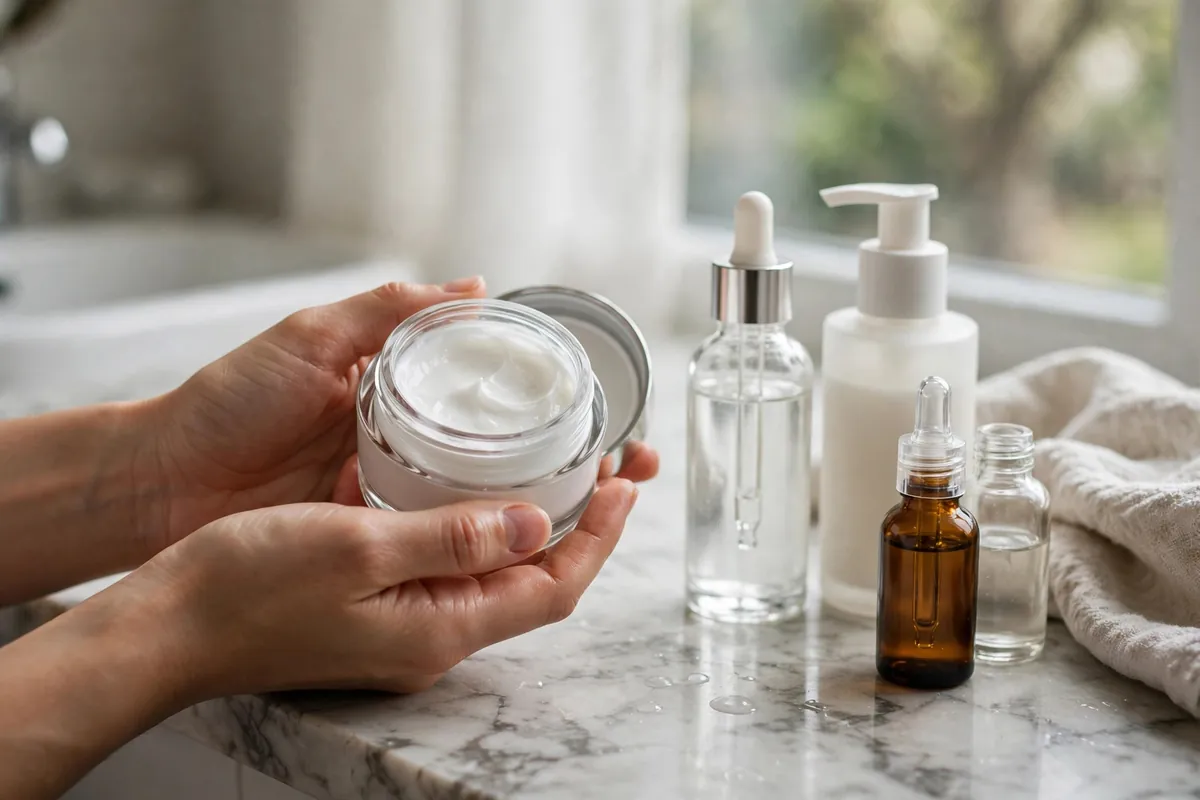
The right moisturizer depends less on brand or price than on matching the formula’s weight to how your skin behaves day to day. Getting that match wrong is why so many people cycle through bottles that “don’t work,” when the product itself was fine — just wrong for their skin.
Figure out your skin type first
Skin type isn’t fixed for life, and it can shift with season, age, and stress. A rough way to check: wash your face, pat dry, and wait 30 minutes without applying anything. Skin that feels tight or flaky is on the drier end. Skin with visible shine, especially around the forehead and nose, leans oily. Both at once — tight cheeks, shiny T-zone — is combination skin, which is common and just means you may want a lighter product in some areas.
For dry skin
Look for richer creams built around ingredients like ceramides, glycerin, hyaluronic acid, or petrolatum, which help skin hold onto water rather than just sitting on the surface. Applying moisturizer to slightly damp skin, right after washing, helps it lock in more moisture than applying to fully dry skin. If your skin is flaking or cracking despite a reasonable routine, that’s worth mentioning to a dermatologist rather than layering on more products.
For oily or acne-prone skin
Skipping moisturizer because your skin is oily often backfires — stripped skin can respond by producing even more oil to make up for it. The fix isn’t no moisturizer, it’s a lighter one: gel-based or labeled “oil-free” and “non-comedogenic,” meaning it’s formulated not to clog pores. Heavier creams meant for dry skin can feel uncomfortable and contribute to breakouts if used on oily skin.
For sensitive skin
Fewer ingredients is usually safer here. Fragrance is one of the most common triggers for irritation, so fragrance-free — not just “unscented,” which can still contain masking fragrance — is worth prioritizing. Introduce anything new one product at a time so that if your skin reacts, you know what caused it, and patch test on your inner arm for a couple of days before putting a new product on your face.
What to check on the label
Beyond skin type, look for “broad spectrum” if the product includes SPF, since that’s the marker for protection against both UVA and UVB rays. Ignore marketing language that isn’t a regulated or measurable term, like “purifying” or “natural,” which don’t describe anything specific about how the product performs. If you already use sunscreen separately, our explainer on what SPF numbers mean covers how to layer it with moisturizer.
If you’ve adjusted for your skin type and still deal with persistent dryness, breakouts, or irritation, a dermatologist can identify what’s going on faster than more trial and error. The American Academy of Dermatology’s skin care basics is a good place to check general guidance before you buy.
For combination skin
Combination skin — tight or normal cheeks with a shinier T-zone — is one of the most common patterns, and it doesn’t need a complicated routine. A lightweight, oil-free moisturizer over the whole face usually works well; if your cheeks still feel dry after that, you can layer a slightly richer cream just on those areas. The mistake to avoid is treating the whole face for the oiliest part, which leaves the dry areas undernourished.
Match the formula to the season
Skin type isn’t fixed across the year. Cold winter air and indoor heating pull moisture out of skin, so the gel moisturizer that worked in July may leave you dry in January. Many people do well keeping a lighter formula for warm months and a richer cream for winter, switching gradually as the weather turns rather than waiting until their skin is already struggling.
The Three Jobs Every Moisturizer Does
Every moisturizer on the shelf is doing the same three jobs in different proportions. Grasp those jobs and choosing becomes far easier than memorizing brands.
Humectants: pulling water in
Humectants draw water into the top layer of skin, from the air or from deeper layers. Glycerin, hyaluronic acid, urea, and sorbitol are the familiar names, and they are why skin can feel instantly plumper after moisturizing. One caveat: in very dry air, unsealed humectants can pull moisture from the skin itself, which is why they work best alongside the next two categories.
Emollients: smoothing the surface
Emollients fill the tiny cracks between skin cells, which is what makes rough skin feel soft. Ceramides, squalane, dimethicone, and plant oils like jojoba sit here. They add little water themselves; they repair the surface so skin holds together better.
Occlusives: sealing it all in
Occlusives form a thin film that slows water evaporating from the skin. Petrolatum, shea butter, beeswax, and mineral oil are the classics, and petrolatum remains one of the most effective occlusives ever tested. Thicker products lean on occlusives, lighter ones on humectants, and that balance is the real difference between a lotion, a cream, and an ointment.
Matching Texture to Skin Type
Dry skin
Dry skin is short on its own oils, so it needs the full package: humectants plus generous emollients and occlusives. Creams and ointments beat lotions here. Look for ceramides, glycerin, shea butter, and petrolatum, and skip fragrance and drying alcohols, which worsen tightness. For the barrier-repair side of dry skin care, read our guide to what ceramides do for the skin barrier.
Oily and acne-prone skin
Oily skin still needs moisture; skipping it often backfires, because dehydrated skin can respond by producing even more oil. Choose a lightweight, oil-free gel or lotion built on humectants like hyaluronic acid and glycerin, with minimal occlusives. Look for non-comedogenic on the label and avoid heavy butters and waxes on the face.
Combination skin
Combination skin, oily in the T-zone and drier on the cheeks, rarely loves one heavy formula everywhere. Use a light lotion all over and layer a richer cream only on dry areas, or pick a balanced medium-weight moisturizer and adjust by season.
Sensitive skin
Sensitive skin cares less about texture than about what is missing from the formula. Fragrance, essential oils, and high concentrations of acids or alcohol are the usual troublemakers. Fragrance-free, hypoallergenic formulas with short ingredient lists are the safest starting point.
Reading the Label Like a Dermatologist
Ingredients appear in descending order of concentration, so the first five tell you what the product mostly is. Water first with glycerin or hyaluronic acid near the top means a light hydrator; petrolatum, shea butter, or dimethicone near the top means a heavier seal. Reliable workhorses include glycerin and hyaluronic acid for hydration, ceramides for barrier support, niacinamide for calming, and dimethicone for a smooth finish. On the avoid side for most people: added fragrance, denatured alcohol high on the list, and harsh sulfates in leave-on products. Ignore marketing phrases like dermatologist tested; the ingredient list tells you almost everything. Mayo Clinic’s overview of moisturizer options for softer skin is a solid, no-hype reference.
When One Moisturizer Is Enough, and When Two Help
Not everyone needs a day cream and a night cream. If one product keeps your skin comfortable morning to night, it is doing its job. Whatever you choose, moisturizer anchors a good skin care routine: cleanse, moisturize, and protect by day; cleanse, treat, and moisturize by night. A separate night formula earns its place when skin feels tight or dull by morning, when you want to use retinoids that belong in the evening, or when winter demands a richer seal than summer. Our full comparison of day versus night moisturizer explains when the split actually matters.
Adjusting Through the Seasons
Cold air, indoor heating, and hot showers strip moisture, which is why winter usually calls for stepping up one texture level, from lotion to cream or cream to ointment on the driest areas. Summer humidity does half the work for you, so lighter gels layer better under sunscreen. Watch your skin, not the calendar: tightness after cleansing means go richer, midday shine means go lighter. Whatever you choose, consistency beats perfection; a simple moisturizer used daily after cleansing outperforms an expensive one used twice a week. Find more practical routines on the All Day Health & Fitness homepage.
Frequently Asked Questions
Do I need moisturizer if I have oily skin?
Yes. Oily skin can still be dehydrated, and skipping moisturizer can prompt more oil production. Choose a lightweight, oil-free, non-comedogenic gel or lotion instead of skipping the step.
What is the difference between lotion, cream, and ointment?
Mostly water-to-oil ratio. Lotions are lightest and mostly water, creams balance water and oil, ointments are oiliest with the strongest seal. Drier skin generally moves up that ladder.
Should my moisturizer contain SPF?
For daytime it is convenient, and SPF 30 or higher is the general recommendation. Make sure it is broad spectrum, and use separate sunscreen for long outdoor stretches, since most people apply less moisturizer than the tested sunscreen amount.
Can moisturizer cause breakouts?
A formula too heavy or comedogenic for your skin can clog pores. If breakouts appear where you apply it, switch to a lighter, oil-free, non-comedogenic option and give it two weeks.
How long before I know if a moisturizer works?
Hydration improves within days, but barrier repair takes longer. Give a new moisturizer two to four weeks of consistent use before judging, unless it causes stinging, redness, or breakouts, in which case stop sooner.
Conclusion
Choosing a moisturizer comes down to how much water your skin loses and how much sealing it needs. Dry skin wants rich creams with ceramides and occlusives, oily skin wants light humectant gels, combination skin wants flexibility, and sensitive skin wants simplicity. Read the ingredient list, adjust with the seasons, and judge by how your skin feels a week in. Get those basics right and the brand on the tube matters far less than you think.