Common Mistakes Beginners Make in Their First Yoga Class
Walking into a first yoga class often comes with expectations that don’t match what the hour actually involves, and most of the awkwardness beginners feel traces back to a handful of avoidable mistakes.
Trying to Keep Up With Everyone Else
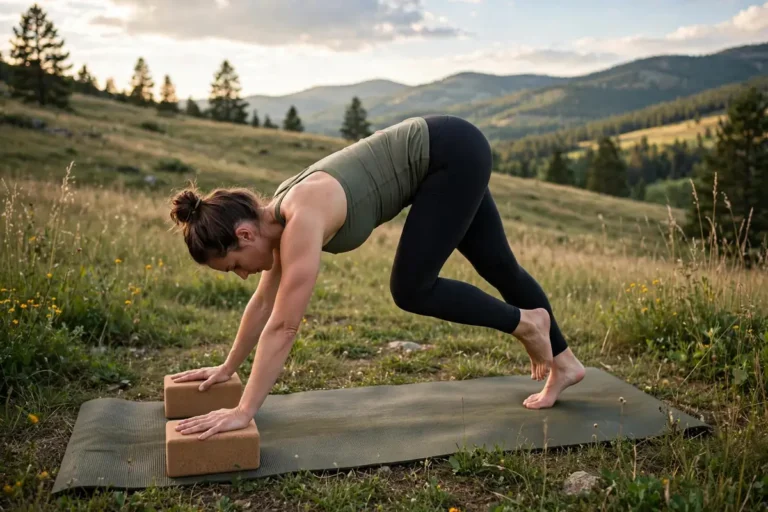
Every class has a range of experience levels, and a pose that looks effortless for the person next to you might represent years of practice. Watching the instructor’s cues rather than the most advanced student in the room, and using props like blocks or straps without hesitation, keeps the class useful instead of frustrating.
Skipping the Modifications
Instructors often offer an easier variation of a pose, and beginners frequently skip it, assuming modifications are only for people with injuries. In a first class, modifications are just as often the more appropriate version of the pose for someone whose body hasn’t built the mobility yet. Taking the modification isn’t a lesser version of yoga — it’s the version that fits where you are right now.
Holding Your Breath
Under a new physical demand, it’s common to unconsciously hold your breath through a difficult pose. Slow, steady breathing is a core part of the practice, not an afterthought, and it also helps you settle into poses rather than fighting them. Noticing you’ve been holding your breath is usually a sign to ease slightly out of the pose until breathing feels normal again. Some instructors will cue breath out loud during a pose specifically because this is such a common pattern for newer students.
Showing Up Without Basic Prep
A few small logistics make the first class smoother: eating a light meal rather than a heavy one beforehand, bringing water, and wearing clothes you can move in without constantly adjusting them. Arriving five or ten minutes early also helps, since most classes start with the room already settled and quiet, and walking in late while everyone else is already on their mats adds a layer of stress that has nothing to do with the poses themselves. None of this is complicated, but it’s the kind of thing beginners often only learn after an uncomfortable first class.
It’s also worth remembering that the same learning curve shows up in any new form of exercise, not just yoga — the first few sessions of anything new tend to feel harder than they will a month in, once the habit itself starts to stick. The NHS guide to yoga is a reasonable place to check what a typical class involves before you go. If a physical therapist has given you movement restrictions, mention that to the instructor before class starts rather than working around it silently.
A first class is not a performance. It’s the first data point in learning what your body needs from the practice.
Skipping Savasana and the Final Rest
Nearly every class ends with Savasana, a few minutes of lying still while the body absorbs the practice. Beginners sometimes slip out early to beat the crowd, treating those last minutes as optional. They are not. That quiet ending is when your heart rate settles, your breathing normalizes, and your nervous system shifts out of effort mode. Leaving early also disrupts everyone else’s rest, which is worth knowing even if nobody says so.
The same logic applies mid-class. Child’s pose is always available, and taking it is not quitting; it is pacing. Teachers expect beginners to rest whenever they need to, and a class where you rested twice and finished calmly taught you more than one where you pushed through everything and left frazzled.
Forcing Your Way Into Deep Stretches
There is a particular temptation in yoga to treat flexibility as the scoreboard. You see someone fold flat over their legs, and your body tries to follow before it is ready. Forcing a stretch is one of the fastest ways to strain something, especially in the hamstrings and lower back, because the stretch reflex actually makes muscles tighten when they are pushed too far too fast.
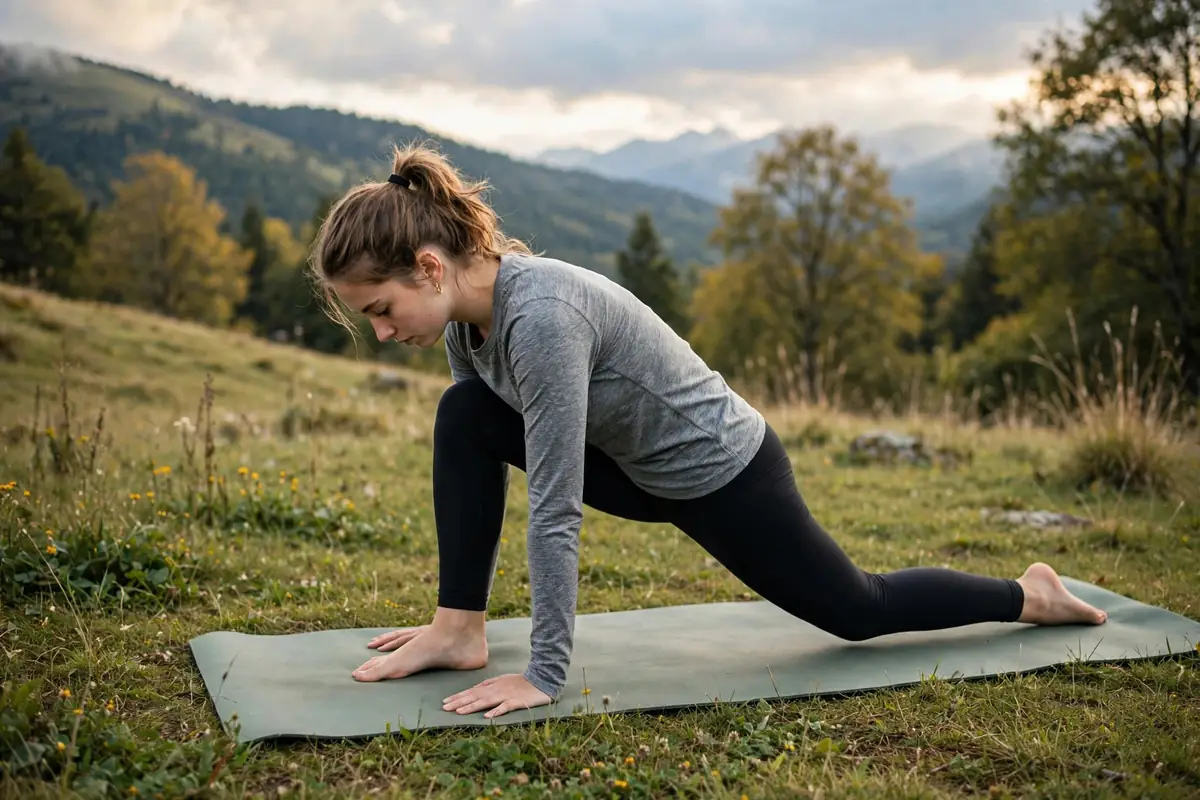
The working rule is simple: a stretching sensation is fine, sharp or pinching pain is not. If a pose demands more range than you have, take the modification without negotiation. Bent knees in forward folds, blocks under your hands, and a shorter stance in lunges are not beginner crutches; they are correct alignment for the body you have today. Downward dog is the classic example: most beginners try to force straight legs and flat heels, when modifying downward dog for tight hamstrings with bent knees gives a better stretch and a safer spine from the first day.
Staying Silent About Injuries and Limitations
Teachers cannot adjust for what they do not know. An old knee injury, a cranky lower back, dizziness, pregnancy: any of these change which poses are appropriate, and instructors would much rather hear about them before class than discover them mid-pose. A quick word before the session starts is enough. You do not need a medical history, just the relevant detail: “my right knee doesn’t like deep bends” gives a teacher everything they need.
This also covers the quieter limitations. If you get lightheaded in forward folds or your wrists ache in weight-bearing poses, say so. Good teachers offer alternatives as a matter of course, but only if they know an alternative is needed.
Treating the First Class as an Exam
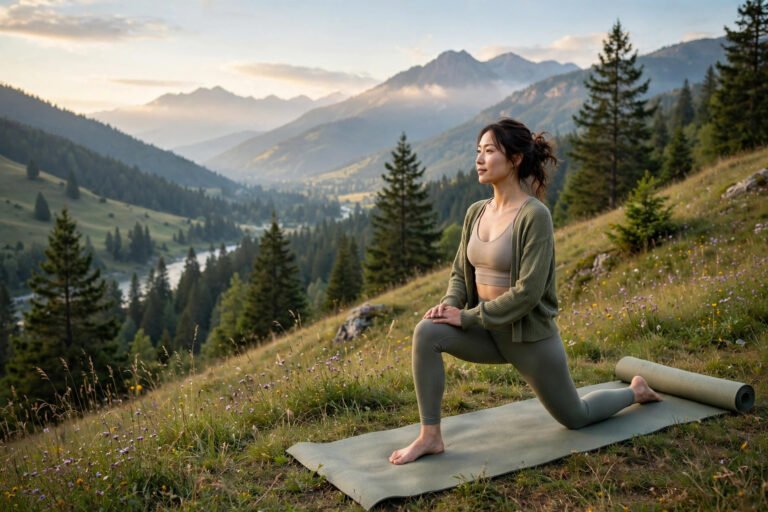
Many beginners walk in carrying a pass-or-fail mindset, as if the class will reveal whether they are “a yoga person.” It will not, because one class reveals almost nothing. The first session is mostly orientation: where the props are, how the teacher cues, what the pace feels like, which poses confuse you. Feeling lost for parts of it is the normal experience, not a sign of failure.
A more useful frame is the experiment frame. Notice what felt good, what felt confusing, and whether you would come back. That is the entire evaluation. The people who become long-term practitioners are rarely the most flexible beginners; they are the ones who came back a second time.
What to Do After Your First Class
Some muscle soreness in the day or two after your first class is normal, especially in the shoulders, core, and inner thighs, which yoga loads in unfamiliar ways. Gentle movement usually helps more than sitting still. If soreness is sharp, localized in a joint, or still getting worse after three days, that is worth paying attention to rather than stretching through.
As for when to go back: within the same week if you can. The second class is where the confusion drops noticeably, because the basic vocabulary of poses is no longer brand new. If a full class feels like too much too soon, a short home routine can bridge the gap. A 10-minute yoga routine built for non-flexible beginners is an easy way to repeat the basic shapes a few times before your next class, which makes everything in the studio feel more familiar.
Frequently Asked Questions
What should I bring to my first yoga class?
Water, clothes you can move in without adjusting, and yourself a few minutes early. Most studios provide mats and props like blocks and straps; if yours does not, it will say so when you book. Skip heavy meals in the two hours before class.
How do I know if a class is too advanced for me?
If the teacher rarely explains poses, most students already know the sequences, and you spend the hour guessing, the level is wrong for a beginner. Switch to a class labeled beginner, gentle, or fundamentals rather than trying to catch up.
Is it embarrassing to use props as a beginner?
No, and experienced practitioners use them too. Blocks, straps, and bolsters exist to make poses fit your body correctly. Using a prop is a sign you understand what the pose is supposed to do, not a sign you are behind.
Should I talk to the teacher before my first class?
Yes, briefly. Arriving five to ten minutes early gives you time to mention injuries or limitations and to ask where props are kept. Teachers genuinely prefer this to discovering an issue mid-class.
How sore should I expect to be after my first class?
Mild, widespread muscle soreness for a day or two is common and normal. Sharp pain, joint pain, or soreness that worsens after three days is not, and deserves rest and possibly professional advice. The NCCIH page on yoga safety is a solid reference on what normal practice involves and when to be cautious.
Conclusion
Almost every awkward first-class moment comes from one of a short list of avoidable mistakes: competing with the room, skipping modifications, forgetting to breathe, arriving unprepared, ducking out of rest, forcing stretches, staying silent about injuries, or grading yourself on day one. Fix those and the first class becomes what it should be: a calm introduction to a practice you might keep for years. If you want to prepare further before you go, the All Day Health & Fitness homepage has more beginner guides on building a sustainable exercise habit.