
Common Mistakes People Make Timing Meals Around Workouts
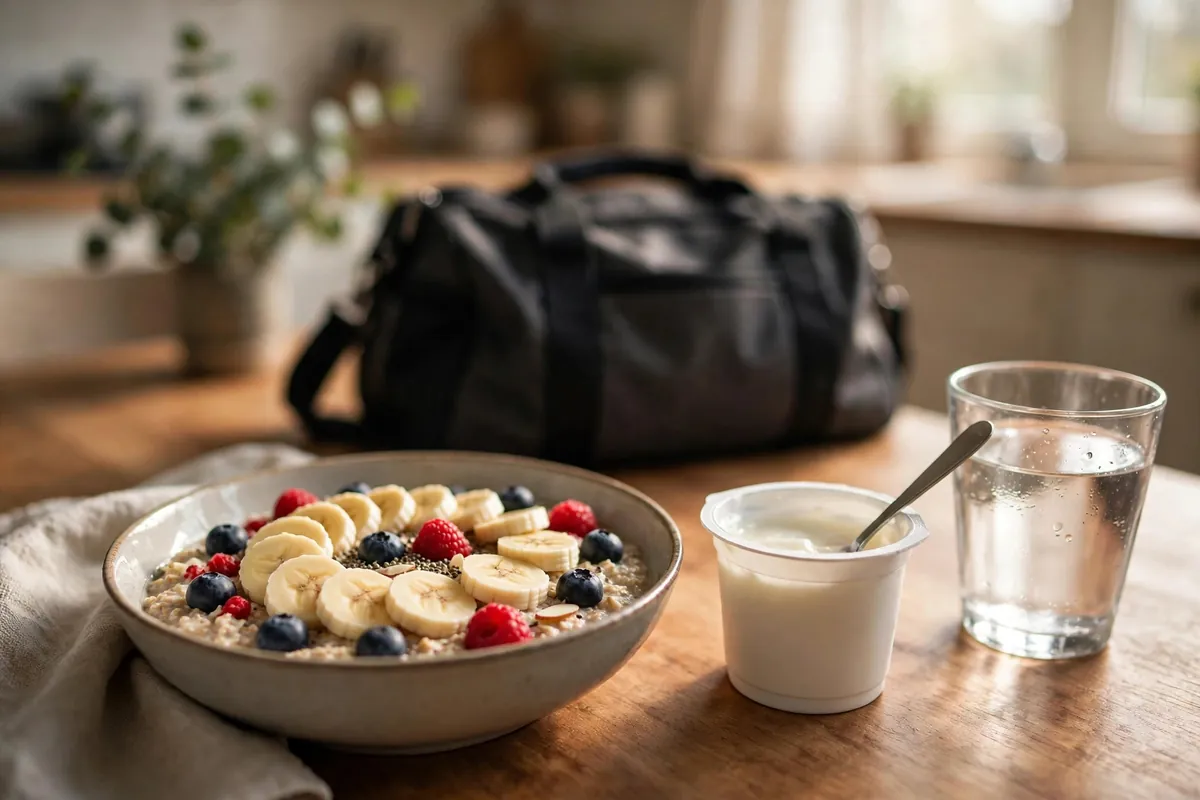
Most meal timing around workouts mistakes come from swinging too far in one direction — eating too close to a session, or skipping food long enough that the workout itself suffers. The fix usually isn’t complicated once you can see the pattern.
Eating too much, too close to the start
A large meal within the hour before a workout is a common setup for cramping, sluggishness, or a stomach that won’t cooperate once the effort picks up. Blood flow shifts toward working muscles once you start moving, which leaves less available for digestion, and a full stomach caught in that handoff tends to make itself known. A smaller, easily digested snack closer to the start — something like a banana or a slice of toast — usually sits better than a full plate.
Skipping food and expecting the same performance anyway
The opposite mistake shows up just as often: heading into a workout with nothing in the tank because eating beforehand felt inconvenient or unnecessary. For a short, easy session this rarely matters. For anything longer or more demanding, showing up without fuel tends to catch up mid-workout as fatigue, lightheadedness, or a pace that falls apart earlier than it should. Neither extreme — stuffed or empty — sets a workout up to go well.
A few other patterns worth watching for:
- High-fat or high-fiber foods right before training, which digest slowly and are more likely to cause discomfort once movement starts.
- Waiting so long after a workout to eat that the next meal turns into overeating out of catch-up hunger.
- Copying someone else’s pre-workout routine exactly, when what sits well is highly individual and takes some trial and error to figure out.
- Treating hydration as separate from meal timing, when being under-hydrated going into a session often gets mistaken for a fueling problem.
None of this requires precision. The useful middle ground is a light meal or snack roughly one to three hours before training, adjusted by how your stomach actually responds, and something with a bit of protein and carbohydrate afterward when you get the chance. The exact minute matters far less than avoiding the two extremes of overfull and running on empty.
The National Academy of Sports Medicine covers fueling and performance basics in more depth if you’re building a routine around regular training.
If you’re dealing with ongoing GI symptoms around workouts, unexplained energy crashes, or you’re managing a condition like diabetes that changes how timing affects you, that’s worth bringing to a doctor or registered dietitian rather than adjusting meal timing by trial and error alone.
Give any new timing pattern a couple of weeks before judging it — one bad session tells you less than it feels like it does in the moment.
It also helps to separate what a workout needs from what a habit wants. Some people eat on a fixed schedule out of routine, not because the timing serves the training, and shifting a meal by half an hour around a workout rarely disrupts the rest of the day as much as it seems like it will beforehand. Treat the timing as flexible until you notice a pattern that causes trouble, rather than assuming there’s one right window everyone should be aiming for.
The pre-workout window: what to eat and when
The rule of thumb is simple: the bigger the meal, the more time it needs. A full balanced meal with protein, carbohydrates, and some fat works well 2 to 3 hours before training. That gives your body time to digest and make the nutrients available. Examples that fit this window: oatmeal with peanut butter and fruit, a chicken and rice bowl, or a whole grain sandwich with eggs.
When you are inside 60 to 90 minutes, shrink the meal and simplify it. This is the time for mostly carbohydrates with a little protein: a banana, toast with honey, a small bowl of cereal with milk, or applesauce. Fat and fiber digest slowly, which is normally a virtue, but right before training they are the most common cause of that heavy, sluggish feeling. Save the high fiber feast for later.
The early morning problem
Training at 5 or 6 a.m. makes a full meal impractical, and that is fine. A small fast carbohydrate like a banana, a few dates, or toast with jam 30 minutes before is enough to top off liver glycogen after the overnight fast. If even that feels like too much, a sports drink sipped on the way works. Then make your post-workout breakfast count: that becomes the most important meal of your training day.
The post-workout window is wider than you think
The old “30-minute anabolic window” has softened considerably in the research. If you ate a protein-containing meal within a few hours before training, your muscles already have amino acids circulating, and eating within two hours after is plenty. The urgency is real mainly when you trained fasted or when another hard session follows within hours, as in two-a-day training or tournament days.
What matters more than the stopwatch is the pattern: protein and carbohydrates after training, then normal balanced meals through the day. Total daily protein drives muscle growth far more than any single precisely timed shake. For the full breakdown of portions and food ideas, recovery nutrition basics picks up exactly where this leaves off.
Mistake: copying someone else’s schedule
Meal timing advice fails most often when it is borrowed wholesale. An influencer’s 5 a.m. fasted cardio routine tells you nothing about your 6 p.m. lifting session after a desk job. Body size, training intensity, gut sensitivity, and even your commute shape what works. The people who get this right treat the guidelines as a starting point and then adjust based on energy, digestion, and performance over a few weeks.
Watch for the subtle signs. Needing the bathroom mid-workout repeatedly points to too much fiber or fat too close. Fading halfway through every session points to too little fuel beforehand. Feeling wired but shaky can mean too much caffeine on too little food. Your training log is a better nutrition coach than any fixed schedule, and planning your week of eating around training gets easier with healthy meal prep ideas for the week doing the heavy lifting in advance. Even a loose healthy meal plan sketched around your training days removes the daily guesswork that leads to skipped meals or last-minute junk.
Frequently Asked Questions
Should I eat before a morning workout?
A small carbohydrate snack usually helps performance, especially for sessions longer than 45 minutes. For very short easy workouts, water may be enough. Experiment and notice your energy levels rather than following a rigid rule.
Is fasted cardio better for fat loss?
Research shows little to no fat loss advantage for fasted versus fed cardio when total diet is equal. Performance often suffers when fasted, which can reduce the quality of the session. Choose based on how you feel and perform.
What should I eat 30 minutes before the gym?
Stick to simple, familiar carbohydrates: a banana, rice cakes with honey, applesauce, or a few dates. Avoid high fat, high fiber, and brand new foods this close to training.
Does protein timing matter more than total protein?
No. Total daily protein intake is the main driver of muscle growth and recovery. Timing is a useful refinement, worth perhaps a small percentage, not the foundation.
Can I work out right after lunch?
Give a full meal at least 2 hours before vigorous exercise. A lighter lunch can work with 60 to 90 minutes of gap. If your schedule is tight, eat half your lunch before and half after.
Conclusion
Good meal timing is less about magic windows and more about avoiding the two big errors: training on a stuffed stomach or on an empty tank. Eat a real meal a few hours out, a light snack when close, and a proper recovery meal after, then adjust to your body. The NIH Office of Dietary Supplements fact sheet on exercise and athletic performance backs up these ranges with the underlying research. For more training and nutrition systems that fit real life, explore All Day Health & Fitness.