What Hyaluronic Acid Does for Skin

Hyaluronic acid is a moisture-binding molecule your body already makes, and in skincare its job is simple: it draws water into the upper layers of skin and helps hold it there. So what does hyaluronic acid do in a serum? It makes skin feel more hydrated and look a little plumper for as long as that water stays put, which is why the way you apply it matters.
Despite the name, it is not an exfoliating acid. It doesn’t peel or resurface skin, and it is generally one of the gentler ingredients on the shelf.
Where it comes from
Hyaluronic acid occurs naturally in skin, joints and other tissue, where it helps keep things cushioned and hydrated. A review in Dermato-Endocrinology, “Hyaluronic acid: A key molecule in skin aging”, describes how much of the body’s supply sits in the skin and how its behavior changes as skin ages. Skincare versions are made in a lab and applied to the surface; they don’t replace what the body makes, but they can add moisture to the outer layer.
What hyaluronic acid does on the surface
It is a humectant, meaning it attracts water. On skin, that translates to a smoother, more comfortable feel, and fine dry lines may look softer while the skin is well hydrated. The effect is temporary and depends on keeping that water in.
Why application order matters
A humectant pulls water from wherever it can find it. On damp skin, that is the water already on your face. On very dry skin in dry air, some people find a hyaluronic serum used alone leaves their skin feeling tighter, not softer. Two simple habits help:
- Apply it to slightly damp skin, right after cleansing and patting mostly dry.
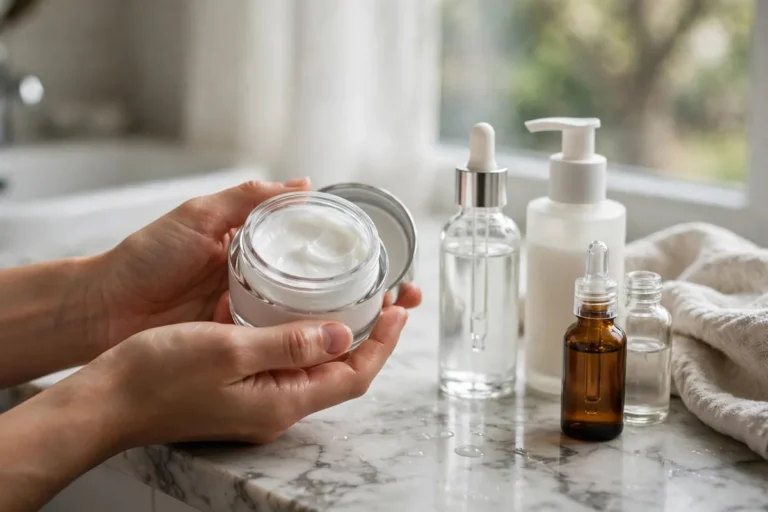
- Follow with a moisturizer to seal the water in. Thin, watery products go on first; thicker creams go on top.
In the morning, sunscreen still goes on last. If you are unsure which moisturizer to pair it with, our guide to choosing a moisturizer for your skin type walks through the options.
Who it suits
Because it is well tolerated, hyaluronic acid suits most skin types, including oily skin that still feels dehydrated. It also tends to sit comfortably alongside other ingredients, much like niacinamide. “Well tolerated” is not a guarantee, though: patch test any new product, follow its label, and stop if you get lasting redness, itching or stinging.
You will find it in serums, moisturizers, masks and even some cleansers. A rinse-off cleanser leaves it very little time on the skin, so a leave-on product is the more sensible place for it. One layer is plenty; stacking several products that all contain it adds cost, not benefit.
What it won’t do
A serum won’t rebuild skin structure, reverse sun damage or fix a skin condition. Marketing that promises dramatic change from a bottle is overselling a hydrating ingredient. Injected hyaluronic acid fillers are a medical procedure, not skincare, and belong only with a licensed, qualified provider.
If your skin stays dry, cracked or itchy despite a steady routine, a dermatologist or your doctor can help work out why. Otherwise, try it for a few weeks on damp skin, under a moisturizer, and judge it by how your skin feels.
Not all hyaluronic acid works the same
Ingredient labels make it look like a single thing, but hyaluronic acid in skincare comes in different sizes, and size changes what it can do. The skincare industry calls this molecular weight. Larger molecules hold a lot of water but are too big to sink far into skin, so they sit near the surface and give that immediate smooth, hydrated feel. Smaller molecules bind less water individually but can reach a little deeper, which is where longer-lasting effects come from.
That is why products containing a mix of molecular weights tend to perform better than single-weight ones: each size covers a different layer. Harvard Health’s dermatology explainer on hyaluronic acid for skin makes this same point, noting that research suggests multi-weight formulas can improve dryness, roughness and the look of fine lines within one to two weeks.
Reading the label
You will rarely see the phrase “molecular weight” printed on a bottle. Instead, look for ingredient variations: hyaluronic acid and sodium hyaluronate are the large forms, while hydrolyzed hyaluronic acid and sodium acetylated hyaluronate are the smaller, deeper-reaching ones. A product listing two or three of these is usually aiming for that layered effect.
A note on concentration
More is not better here. Most effective serums sit at low concentrations, often around 1 to 2 percent, and some dermatologists advise steering clear of anything above about 2 percent, which may leave skin feeling dry or irritated rather than hydrated. If a label does not state a percentage, treat a watery, easily spread texture as the sign of a sensible formula.
Pairing hyaluronic acid with other ingredients
Hyaluronic acid does its best work as part of a team. A humectant pulls water in, but something has to stop that water escaping again. That job belongs to occlusives, which form a light barrier over the skin. Petrolatum and mineral oil are the classic examples, with shea butter, cocoa butter and jojoba oil as plant-based options. This is the reason the damp-skin-plus-moisturizer habit works: the moisturizer’s occlusive ingredients lock in the water the serum just delivered.
It also pairs comfortably with active ingredients that can otherwise leave skin feeling tight. Retinol and glycolic acid are effective but can cause dryness, especially in the first weeks, and applying a hyaluronic serum first can help skin tolerate them better. With vitamin C, the two work well together; if you use a potent L-ascorbic acid serum, it usually goes on first, with the hyaluronic layer after. And for a longer-term hydration strategy, ceramides are worth knowing about, since they help rebuild the barrier that keeps all that drawn-in moisture from leaking out.
What the evidence actually shows
It helps to separate what is well supported from what is marketing. There is reasonable evidence that topical hyaluronic acid improves skin hydration and softens the look of fine lines and redness over a few weeks of regular use, and some studies also suggest it can help soothe mild dermatitis. The famous “holds a thousand times its weight in water” figure refers to the molecule’s water-binding capacity in a lab setting, which is real but does not translate one to one into visible results on your face.
On the weaker end of the evidence, no topical product has been shown to reverse aging itself or rebuild deeper skin structure. Claims that a serum “turns back the clock” are marketing, not dermatology. Hyaluronic acid fillers are a different matter entirely: injected by a clinician, they physically add volume under the skin, but that is a medical procedure with its own risks and costs, not skincare.
Frequently Asked Questions
Can you use hyaluronic acid every day?
Yes. Most people use it morning and evening, applied to damp skin after cleansing and before moisturizer. If your skin feels comfortable and hydrated, the frequency is right. There is no established need to cycle it on and off.
Can hyaluronic acid cause acne?
It is considered non-irritating and is not known to cause breakouts on its own. If pimples appear after starting a hyaluronic product, another ingredient in the formula, such as cocoa butter or lanolin, is the more likely culprit. Check the full ingredient list before blaming the hyaluronic acid.
Should hyaluronic acid go on before or after moisturizer?
Before. Thin, watery products go on first so they can reach the skin, then a thicker moisturizer goes on top to seal the hydration in. In the morning, sunscreen still goes on last.
Can you use hyaluronic acid with retinol or vitamin C?
Yes, and it is often a good combination. With retinol, a hyaluronic layer underneath can cushion the dryness and flaking that retinol sometimes causes early on. With vitamin C, the two complement each other; the vitamin C serum generally goes on first.
Does hyaluronic acid work in dry climates?
It can, but the sealing step becomes essential. In very dry air there is little ambient moisture to draw from, so the serum pulls from the water already on your damp skin instead, and a moisturizer on top prevents that water from evaporating away. Some people also run a humidifier in winter for the same reason.
Conclusion
Hyaluronic acid earns its place in a routine by doing one thing well: keeping the upper layers of skin hydrated. Choose a multi-weight formula at a sensible concentration, apply it to damp skin, seal it with a moisturizer, and give it a few weeks. Judge it by how your skin feels, not by what the marketing promises. For more plain-language guides to the ingredients in your routine, start at the All Day Health & Fitness homepage.