Storing Skincare Products: The Mistakes That Let Heat and Light In
Storing skincare products: the mistakes to fix
Most storing skincare products mistakes come down to heat, light and air. Products last longest in a cool, dry, dark place with the lid closed, and they break down faster on a sunny windowsill, in a hot car or in a steamy bathroom.
That matters for more than waste. A product that has broken down may stop doing its job, and some can irritate skin once they change. Here are the habits that cause most of the trouble.
Leaving sunscreen in the car or the sun
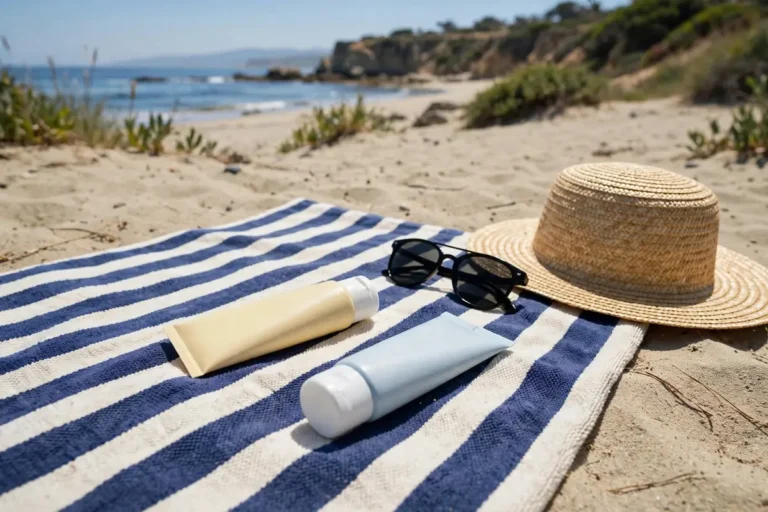
This is the one with real consequences. The American Academy of Dermatology notes in its advice on when to toss makeup and sunscreen that heat, whether from direct sunlight or a hot, closed car, can make sunscreen ingredients break down before the expiration date. A sunscreen that has broken down may not protect you the way the label says. Keep it in your bag in the shade, not on the dashboard, and wrap it in a towel at the beach.
Displaying products on a sunny shelf
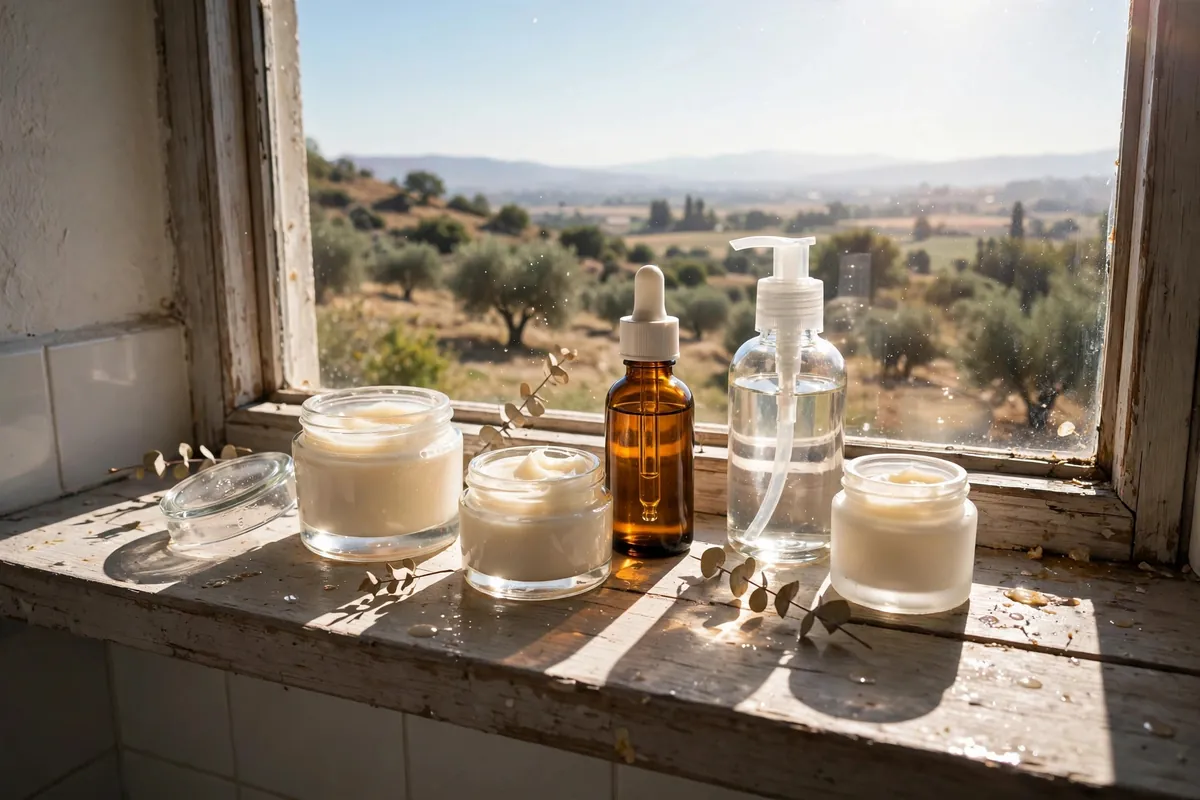
Clear bottles lined up by a window look tidy, but light can degrade some ingredients. Retinol and vitamin C are two well-known examples, which is why they often come in opaque or tinted packaging. Our explainer on what retinol does covers why it is usually a night product for the same reason. Keep products in their original packaging and store them away from direct light.
Keeping everything in a steamy bathroom
Heat and humidity from daily showers can speed up changes in texture and encourage germs in jars. If your bathroom gets warm and damp, a bedroom drawer or cupboard is often a better home for the products you don’t use every day.
Leaving lids off and fingers in
Air exposure and dipping fingers into jars both shorten a product’s life. Close caps right after use, and use a clean spatula or wash your hands before scooping from a tub.
Losing track of when you opened it
Many products carry a small open-jar symbol with a number and the letter M, showing how many months it is meant to last after opening. Sunscreen carries an expiration date. Writing the opening date on the container with a marker takes seconds and removes the guesswork.
Putting skincare in the fridge without checking
A cool spot is good; a fridge isn’t always better. Some creams separate or change texture when cold. Unless the label says to refrigerate, a cool cupboard is enough.
How to tell a product has turned
Look for a change in color, smell or texture, separation that doesn’t mix back in, or a product that suddenly stings. If your skin reacts, stop using it. If a rash or irritation doesn’t settle after you stop, see a dermatologist or your doctor. Signs of a product breaking down also make it harder to judge whether it is working, something we cover in our guide on telling whether a skincare product is working.
Today, move your sunscreen out of the car and your clear bottles off the windowsill.
Decoding Expiry Dates and the PAO Symbol
The expiry date printed on a skincare product is usually about safety, not a suggestion that the product turns to poison the day after. Manufacturers run stability tests at controlled temperatures to determine how long a product keeps its quality in an unopened state, and that date assumes the product has been stored as labeled.
There is an important distinction between two kinds of dates:
- Expiry or “use by” date: the date up to which the manufacturer guarantees the product’s safety and quality in an unopened state.
- PAO (period after opening) symbol: the small open-jar icon printed on most cosmetic packaging, showing a number followed by M, for example 6M or 12M. This is how many months the product is expected to stay good after you first open it.
Many moisturizers and serums carry a PAO of 12 months, while natural formulas with fewer preservatives may show 6M. Writing the date you opened the product on the container with a marker is the simplest way to make these symbols useful.
When a sunscreen passes its expiry date or its PAO has clearly expired, replace it rather than finishing the bottle. Sunscreen is the one product where freshness has direct safety consequences, because its protection claims depend on the active filters still working at full strength. For other products, a few months past the date may only mean reduced effectiveness, but there is no reliable way to judge that at home, so erring on the side of replacement is the sensible call.
What Heat and Light Actually Do to Formulas
Most people hear that heat and light degrade skincare, but understanding what is actually happening makes the advice much easier to follow.
Heat speeds up the chemical reactions that break active ingredients down. Antioxidants such as vitamin C are particularly sensitive: in clear packaging exposed to light and air, ascorbic acid oxidizes from clear to yellow to brown, and at that point it has largely lost its brightening power. Retinol degrades in a similar way, which is why it comes in opaque or tinted packaging and is typically recommended as a night product. Preservatives can also weaken over time in hot conditions, which lets microbes gain a foothold sooner, especially in jar packaging that is repeatedly opened.
This is why the advice to store products in a cool, dark, dry place is not just being fussy. A bedroom drawer keeps all three enemies at bay: the temperature is stable, the drawer blocks light, and it stays far less humid than a bathroom after a shower. The AAD’s guidance on when to toss makeup and sunscreen specifically calls out heat as a factor that breaks sunscreen ingredients down before the printed date, which is worth remembering next summer.
Storage Rules by Product Type
Not every product is equally vulnerable. Here is how the advice changes across a typical shelf:
- Sunscreen: the most heat-sensitive of all. Never leave it in a hot car or on a beach towel in direct sun for hours. At the beach, keep the bottle wrapped in a towel inside your bag, in the shade.
- Vitamin C serums: keep in a cool, dark place and always recap tightly. If the liquid has turned dark brown, it has oxidized and should be replaced.
- Retinol and retinoids: light and heat both degrade these. Opaque packaging helps, but a cool drawer is still better than a sunny shelf.
- Probiotic and natural formulas: products with fewer or milder preservatives often have shorter PAO windows, so respect the symbol and keep them cool.
- Jars and tubs: every dip of a finger introduces microbes. A small spatula or clean hands before scooping extends the product’s safe life.
- Clay masks and powders: humidity is the enemy here. Dry powders last a long time if kept dry, but a steamy bathroom shelf is the worst place for them.
Skincare Fridges: Useful or Marketing Gimmick?
Mini skincare fridges have become a popular purchase, but are they worth it? The honest answer: sometimes. They keep products at a stable, cool temperature and away from light, which genuinely helps heat-sensitive formulas like vitamin C serums and some natural products in warm climates. A cool product can also feel soothing on puffy morning skin, though that is comfort rather than science.
But a fridge is not necessary for most people, and it can backfire. Some thick creams and emulsions separate or turn grainy when stored too cold. Anything the label does not say to refrigerate is usually fine in a cool cupboard. If you live somewhere hot without air conditioning, a skincare fridge may genuinely extend product life. If you do not, the money is better spent on the products themselves. A simple rule: refrigerate only what the label says to refrigerate, plus vitamin C serums in hot weather.
Frequently Asked Questions
Can I store skincare in the bathroom?
It depends on the bathroom. A cool, well-ventilated bathroom is fine for most products. A small bathroom where every shower leaves the mirror fogged and the air damp is a poor home for anything you want to keep for months. Move sensitive products, especially sunscreen and vitamin C serums, to a bedroom drawer.
How long does sunscreen last once opened?
Check the PAO symbol on the bottle, which is typically 12 months. Once the printed expiry date has passed, or the product has spent a summer baking in heat, replace it. Applying an old or heat-damaged sunscreen may give you a false sense of protection.
What does the open-jar symbol with a number mean?
That is the PAO symbol, telling you how many months the product is good for after opening. 6M means six months, 12M means twelve. Mark the opening date on the container so you can track it.
Is it safe to use expired skincare?
Usually not dangerous, but often less effective, and the preservatives that keep microbes in check weaken over time. Jars are the riskiest format once expired because fingers have been in them. When in doubt, replace, especially sunscreen.
Should vitamin C serum be refrigerated?
It can help, particularly in warm climates, because cool, dark storage slows oxidation. A bedroom drawer away from light works almost as well. If the serum has turned dark brown, it has oxidized and should be replaced regardless of where it was stored.
Conclusion
Good storage is a small habit with an outsized payoff: your products keep working as labeled, last their full lifespan, and stay safe to use. Keep sunscreen out of the heat, respect the PAO symbol, and give your formulas a cool, dark drawer to live in. For more skincare guides, visit All Day Health & Fitness.