What Do Ceramides Do for the Skin Barrier?
Ceramides are fats that sit between the cells in the outer layer of your skin and help hold them together. What do ceramides do in practice? They help that outer layer hold on to water and keep out irritants, which is why moisturizers include them.
The skin barrier, briefly
The outermost layer of skin is often described as a brick wall. The skin cells are the bricks, and a mix of fats, including ceramides, cholesterol and fatty acids, is the mortar in between. When that mortar is intact, water stays in and irritants have a harder time getting through.
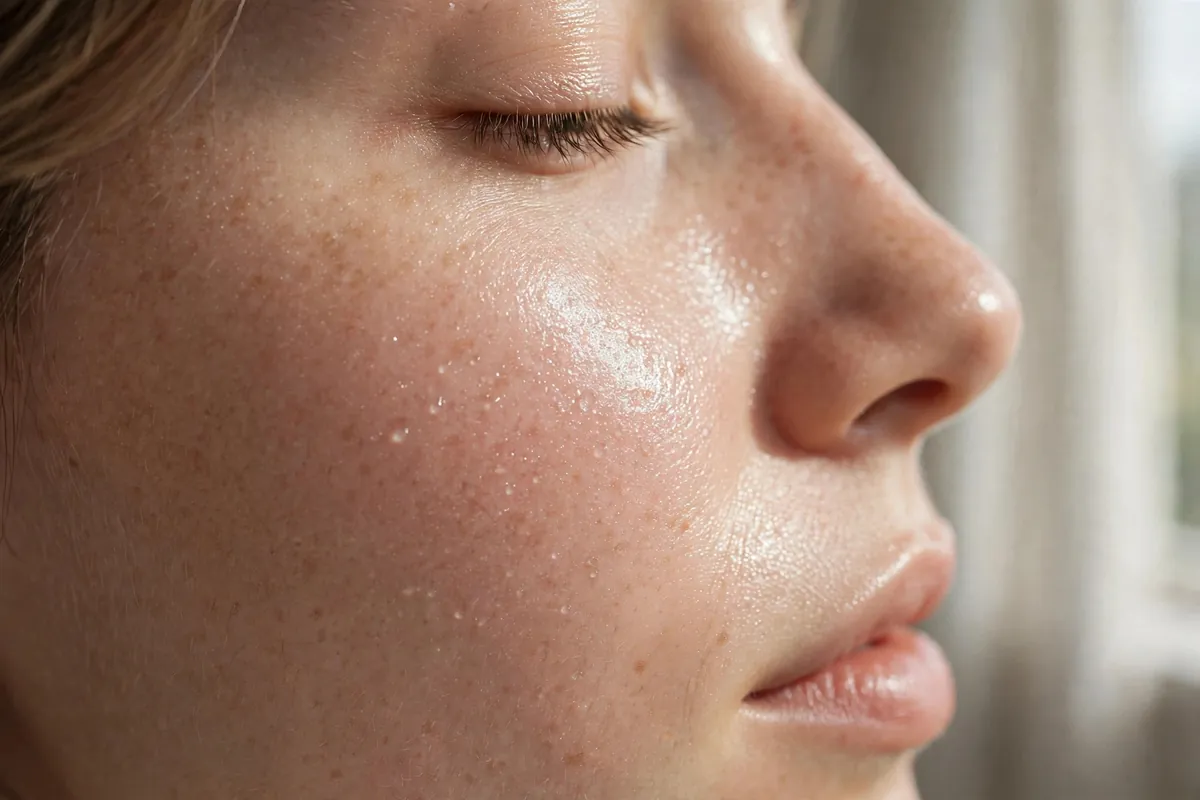
When the barrier is disrupted, skin tends to feel tight, dry, rough or easily stung by products that never bothered it before. Cold weather, low humidity, hot showers, frequent hand washing, harsh cleansers and over-exfoliating can all wear it down.
What do ceramides do in a moisturizer?
Because ceramides are already part of the skin’s own barrier, adding them in a moisturizer is a way to support that structure from the outside. The American Academy of Dermatology’s guide on how to pick a moisturizer lists ceramides among the ingredients a dermatologist suggests looking for, alongside hyaluronic acid.
They are often combined with cholesterol and fatty acids, the other parts of the barrier’s mortar. You’ll also see them next to humectants, ingredients that draw water in. Our explainer on what hyaluronic acid does covers that side of things. Ceramides help keep water in; humectants help bring it in.
Who tends to notice a difference
People with dry skin, skin that feels tight after washing, or skin that has been irritated by too many active products often find a ceramide moisturizer comfortable. It isn’t a dramatic ingredient. The effect is usually skin that feels less tight and less reactive over a few weeks, not an overnight change.
Oily skin can use ceramides too. They are available in light lotions and gels, not only thick creams, so skin type is more about the texture you pick than whether to use them at all. Our guide on choosing a moisturizer for your skin type goes through that.
What ceramides won’t do
They won’t repair a barrier you keep disrupting. If you are washing with very hot water, scrubbing daily or layering several strong actives, a ceramide cream is working uphill. Easing off the irritants usually matters more than adding anything.
They also aren’t a treatment for skin conditions. Eczema, psoriasis, persistent redness and rashes that don’t settle deserve a visit to a dermatologist or your doctor, who can tell you what is going on and whether a barrier cream fits into the plan.
How to try one
Look for the word “ceramide” in the ingredient list, often written as ceramide NP, AP or EOP. Choose a fragrance-free product if your skin is easily irritated. Patch test it on a small area for a few days first, then apply it to slightly damp skin after cleansing, morning and night.
Give it several weeks before you judge it, and change nothing else in the meantime.
The Brick-and-Mortar Model of Your Skin
Picture the outermost skin layer, the stratum corneum, as a brick wall. The bricks are flattened dead skin cells called corneocytes. The mortar is a lipid mixture in which ceramides are the largest component, roughly a third to half of the lipids between cells, alongside cholesterol and fatty acids in a roughly balanced ratio. This matrix is the core of the skin barrier: the structure that keeps water in and irritants, allergens, and microbes out.
When ceramide levels are healthy, the wall is tight. When they fall, the mortar crumbles: water escapes faster through the gaps, a process called transepidermal water loss, and irritants slip in more easily. The result is the familiar cluster of barrier trouble: tightness after cleansing, roughness, redness, stinging from products that never stung before, and skin that feels dry again an hour after moisturizing.
The Ceramides You Will See on Labels
Product labels draw from a small, well-studied set: ceramide NP (ceramide 3), ceramide AP (ceramide 6-II), and ceramide EOP (ceramide 1). Dermatology literature calls these the physiological ceramides because they mirror what skin naturally makes. Formulas combining all three, plus cholesterol and fatty acids in a balanced ratio, tend to support the barrier better than a lone ceramide, because the real barrier is a team effort.
You will also see natural versus synthetic ceramides. Natural versions are extracted from plant or animal sources; synthetic ones, sometimes called pseudoceramides, are lab-made to mimic the skin’s own. Most dermatologists consider well-made synthetics the practical choice: more stable, consistent, and free of extraction contaminants. Healthline’s overview of ceramides for skin and hair covers the types and their roles in approachable detail.
Why Ceramide Levels Drop
Production declines with age, measurably from middle age onward, which is one reason mature skin grows drier and more reactive. But habits matter as much as birthdays. Harsh, high-pH cleansers strip lipids with every wash. Over-exfoliation dismantles the barrier faster than it rebuilds. Long hot showers, cold dry winters, indoor heating, and unprotected UV exposure all chip away at ceramide levels too.
Much of this is controllable, and a gentle, low-pH cleanser does more for ceramide levels than any serum because it stops the daily drain. If you suspect your routine is the problem, our guide to choosing a moisturizer for your skin type helps rebuild around barrier-friendly textures and ingredients.
How to Add Ceramides to Your Routine
For most people a ceramide moisturizer is the simplest delivery method, since moisturizers already contain the cholesterol and fatty acids that complete the barrier team. It slots into any basic skin care routine without extra steps. Serums and toners with ceramides make most sense layered under a moisturizer rather than replacing one. Apply to slightly damp skin after cleansing, and give it time: barrier repair is measured in weeks, with studies showing meaningful improvement after about a month of consistent use.
Ceramides pair well with niacinamide, and the pairing is more than marketing: niacinamide has reasonably good evidence for stimulating the skin’s own ceramide production, so a niacinamide serum under a ceramide moisturizer supports the barrier from both directions. Our explainer on what niacinamide does covers that ingredient fully. One honest caveat: ceramide products are well supported for dryness and barrier weakness, but they are supportive care, not treatment for skin conditions. Persistent eczema, psoriasis, or dermatitis deserves a dermatologist, not just a richer cream.
What Ceramides Cannot Do
Enthusiasm is justified, but claims should stay honest. Ceramides will not erase deep wrinkles; they can soften fine dehydration lines by restoring plumpness, a real but limited effect. They do not rebuild the barrier overnight, and no topical restores ceramide levels permanently, which is why consistent use beats any single application. More ceramides in a formula is not automatically better; the ratio with cholesterol and fatty acids matters more than the raw percentage. And while ceramide products suit nearly all skin types, they support medical care for diagnosed conditions rather than replacing it. For more evidence-based explainers, browse the All Day Health & Fitness homepage.
Frequently Asked Questions
Are ceramides good for oily or acne-prone skin?
Yes. Ceramides are not pore-clogging, and a healthy barrier helps acne-prone skin tolerate treatments better. Choose a lightweight, non-comedogenic lotion or gel.
How long do ceramide products take to work?
Surface hydration improves within days, but genuine barrier repair typically takes three to four weeks of consistent twice-daily use.
Can ceramides irritate skin?
Ceramides are among the least irritating skincare ingredients. If a ceramide product stings, the culprit is almost always another ingredient, such as fragrance or an active acid.
Is a ceramide serum necessary, or is a moisturizer enough?
For most people a ceramide moisturizer is enough, since it delivers ceramides with their barrier partners. A serum adds value mainly for intensive layering.
Do ceramide supplements work?
Evidence is limited. A few small studies suggest oral ceramides may modestly improve hydration, but the research is early. Topical application remains the reliable route.
Conclusion
Ceramides are the mortar in your skin’s brick wall, and keeping that mortar intact is among the highest-leverage things a routine can do. Levels fall with age and harsh habits, but gentle cleansing, a ceramide moisturizer with a balanced lipid mix, and a few weeks of patience rebuild what daily life wears down. They will not perform miracles, but for dryness, sensitivity, and barrier weakness, few ingredients offer a better evidence-to-irritation ratio.