What Vitamin C Serum Does for Skin

Short answer: a vitamin C serum is an antioxidant product that helps protect skin from some of the everyday damage caused by sun exposure and pollution, and with steady use it may help uneven tone look more even. What it can’t do is work well once it has broken down, which is why storage matters as much as the formula itself.
So if you’ve wondered what does vitamin C serum do beyond the marketing, the honest answer is that it’s a supporting player, useful alongside sunscreen rather than a replacement for it.
What vitamin C does in the skin
Ultraviolet light and air pollution generate unstable molecules in the skin, often called free radicals, which contribute to the breakdown of collagen and to uneven pigmentation. Antioxidants like vitamin C help neutralise some of them before they cause harm.
Vitamin C also plays a role in the skin’s own collagen production, and it can interfere with the process that produces excess pigment. A review of the roles of vitamin C in skin health sets out this evidence in detail. That’s why it’s commonly marketed for dullness and dark spots. Results are gradual and modest; think weeks to months of consistent use, not days. Our piece on telling whether a skincare product is working explains how to judge that fairly.
Why stability is the real issue
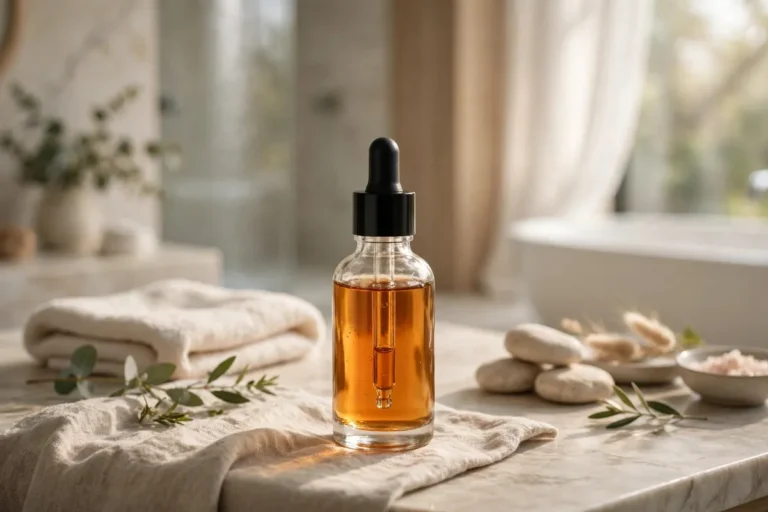
The most studied form of vitamin C is also one of the most fragile. Exposure to air, light and heat causes it to oxidise, and an oxidised serum does very little. You can often see it happening: a serum that started clear or pale straw-coloured turns darker yellow, then orange or brown.
Manufacturers deal with this in different ways. Some use more stable derivatives of vitamin C, which tend to be gentler but may act more slowly. Others rely on opaque, airtight or pump packaging to limit exposure. Neither approach is automatically better; what matters is that the product is still fresh when it reaches your face.
A few habits help it last:
- Keep the cap on tightly and close it straight after use.
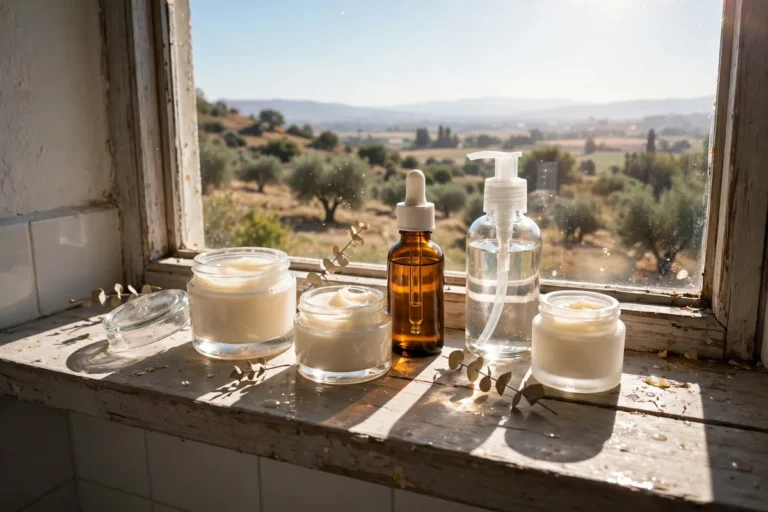
- Store it away from windowsills, steamy shower shelves and anywhere warm. Our guide to storing skincare products covers the common spots that shorten a product’s life.
- Buy a size you’ll finish in a reasonable time rather than a large bottle that sits open for months.
- If it has changed colour noticeably or smells off, replace it.
Using it without irritation
Vitamin C serums vary widely in strength and acidity, and stronger isn’t always better. Some people find certain formulas cause stinging, redness or dryness, especially on sensitive skin. Patch test any new serum on a small area for several days first, and follow the directions on the product label rather than a routine you saw online.
Many people apply it in the morning, since its protective role pairs naturally with daytime exposure, followed by moisturiser and sunscreen. Sunscreen is still doing the heavy lifting there; vitamin C adds a second line of defence, not a substitute.
If you have a skin condition, use prescription skincare, or notice irritation that doesn’t settle after you stop, check in with a dermatologist or pharmacist before carrying on.
The Core Benefits, With the Evidence Behind Them
Vitamin C serum has earned its reputation through a genuinely solid evidence base, but it is worth separating what research supports well from what is still being studied. The strongest findings cluster around four effects: antioxidant protection, brightening, collagen support, and help with hyperpigmentation. Each works through a different mechanism, and each responds on a different timeline.
Antioxidant Protection Against Daily Damage
Vitamin C is a potent antioxidant, meaning it neutralizes free radicals, the unstable molecules generated by UV light and pollution that damage skin cells. Research shows that topical vitamin C can reduce UV-induced damage and inflammatory responses in the skin. An important caveat: it is not sunscreen. Studies and dermatologists agree that vitamin C offers a mild sun-protective effect at best, and it should always be paired with actual sunscreen rather than used as a substitute. Think of it as a second layer of defense under your SPF, not a replacement.
Brightening and Evening Out Skin Tone
The brightening effect is one of vitamin C’s most documented benefits. It works partly by interacting with tyrosinase, the enzyme involved in melanin production, which helps reduce excess pigment formation. This makes it useful for post-inflammatory dark spots left by acne, sun spots, and general dullness. Studies on hyperpigmentation generally show noticeable improvement over eight to twelve weeks of consistent use. Results are gradual rather than dramatic, and vitamin C cannot erase every type of discoloration, but for surface-level unevenness it is among the best-supported options alongside other brightening ingredients like niacinamide.
Collagen Support and Firmness
Vitamin C acts as a cofactor in collagen production, the process that keeps skin firm and resilient. A small-scale study applying a 5% vitamin C solution over six months found increased skin thickness compared with a placebo, which supports the collagen-building claim, though researchers note the study was small and more data would strengthen the case. In practical terms, expect vitamin C to contribute to firmer-feeling skin over months, not days. It cannot reverse wrinkles that have already formed, but it can help protect against the premature wrinkling driven by sun damage.
How to Use Vitamin C Serum Without Irritation
L-ascorbic acid, the pure and most studied form of vitamin C, works best at low pH and concentrations between 10 and 20 percent. That acidity is part of why it works, and also part of why it can irritate sensitive skin. If you are new to vitamin C or your skin reacts easily, start with a lower concentration or a stable derivative such as ethylated L-ascorbic acid or sodium ascorbyl phosphate. Apply a few drops to clean, dry skin in the morning, before moisturizer and sunscreen.
Pairing Vitamin C With Other Ingredients
Vitamin C pairs well with vitamin E and ferulic acid, a combination studied for its enhanced antioxidant effect. It also combines reasonably with niacinamide in modern formulations, despite old concerns about the pairing; the two can coexist in a routine, often with vitamin C in the morning and niacinamide later or in the same formula. Be cautious layering vitamin C with strong retinoids or exfoliating acids in the same routine, since stacking too many actives is a common route to irritation. If you use all of these, keep them in separate routines or alternate days.
Storage Matters More Than You Think
L-ascorbic acid is famously unstable. Exposure to air, light, and heat degrades it, and a serum that has turned dark brown or orange has likely oxidized and lost much of its potency. Choose products in dark, airtight, preferably pump packaging, store them away from the bathroom’s heat and humidity, and use them within the recommended period after opening. Our guide to skincare storage mistakes covers the heat and light pitfalls that quietly shorten a product’s effective life. If your vitamin C serum smells off or has darkened significantly, it is time for a fresh bottle.
Frequently Asked Questions
Should I use vitamin C serum in the morning or at night?
Morning is the most common recommendation, because its antioxidant protection is most useful during the day against UV and pollution. Some formulas paired with brightening ingredients are labeled for night use. Either way, consistency matters more than the exact hour.
How long before I see results from vitamin C serum?
Expect at least eight weeks of daily use before judging brightness and pigmentation changes, and several months for firmness. Antioxidant protection begins immediately, but visible changes follow the skin’s slower renewal pace.
Can vitamin C serum replace sunscreen?
No. Vitamin C provides only mild sun-protective effects. It works best as a complement to a broad-spectrum sunscreen with SPF 30 or higher, never as a substitute. See WebMD’s overview of vitamin C serum for more.
Why did my vitamin C serum turn brown?
Browning usually means oxidation: the vitamin C has reacted with air, light, or heat and lost potency. Dark, opaque, airtight packaging and cool, dry storage slow this down, but no bottle lasts forever.
Can sensitive skin use vitamin C?
Often yes, with the right formula. Pure L-ascorbic acid at high concentrations can sting reactive skin. Stable derivatives at lower concentrations are generally gentler. Patch testing before full-face use is the sensible first step.
Conclusion
Vitamin C serum is one of the few skincare ingredients with real evidence across multiple benefits: antioxidant defense, visible brightening, collagen support, and help with dark spots. Used consistently in the morning under sunscreen, stored carefully, and given enough time, it earns its place in a routine. To keep learning how ingredients and routines work together, explore more at All Day Health & Fitness.