How to Build a Travel Skincare Routine That Holds Up
A travel skincare routine works best when it is smaller than your routine at home, not a miniature copy of it. Pack the few steps that protect your skin, cleanse, moisturize and sunscreen, and leave the rest behind for a week or two.
Travel is hard on skin for boring reasons. Cabin air is dry, hotel water can feel different, you sleep less, and you spend more time outside than usual. None of that calls for new products. It calls for fewer, familiar ones used consistently.
What to pack, and what to leave
Start from the core of your usual routine. If you already follow something like our simple morning skincare routine, you have most of your list. For most people that means:
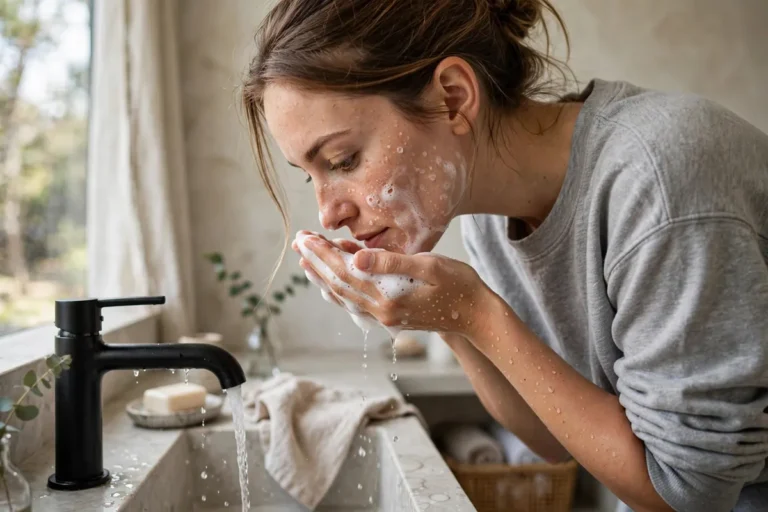
- A gentle cleanser you already know your skin tolerates.
- One moisturizer. If you are heading somewhere cold or dry, a slightly richer one than usual.
- A broad-spectrum sunscreen you like enough to reapply, plus a lip balm with SPF.
- Anything a doctor or dermatologist has prescribed for you, in its original packaging.
What can usually stay home: extra serums, masks, exfoliants and anything you bought recently and haven’t tried yet. The American Academy of Dermatology points out in its guide to applying skin care in the right order that using too many products can irritate the skin. A trip, with sun, wind and less sleep, is a poor time to add to that load.
Resist the urge to buy sample sizes of products you’ve never used. A new cleanser or moisturizer that disagrees with your skin is much easier to deal with at home than halfway through a trip. If you want to try something new, patch test it a couple of weeks before you leave.
Keeping the travel skincare routine going on the road
Decant liquids into small, clean, labeled containers rather than leaving them in open tubs. Close caps tightly and bag them, because pressure changes on flights can push product out of loosely sealed bottles. Keep sunscreen out of hot cars and direct sun where you can; heat breaks it down faster.
On the plane, a plain moisturizer and lip balm are enough. Wash your hands before touching your face, which matters more than any product when you are handling shared surfaces all day.
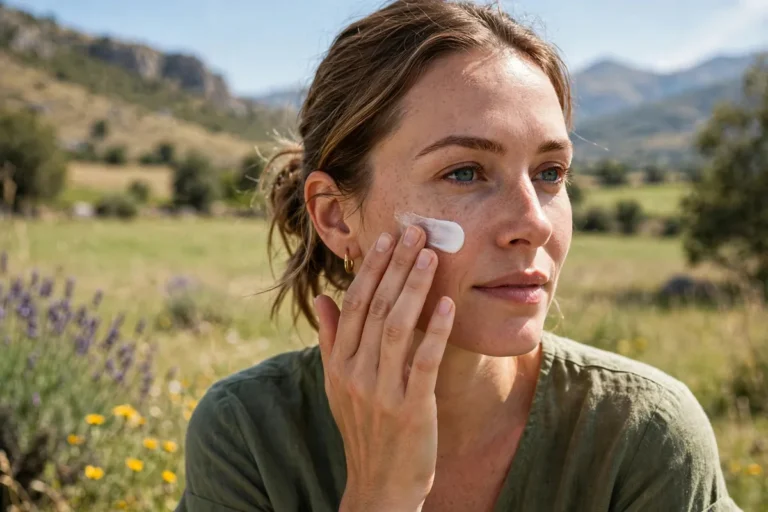
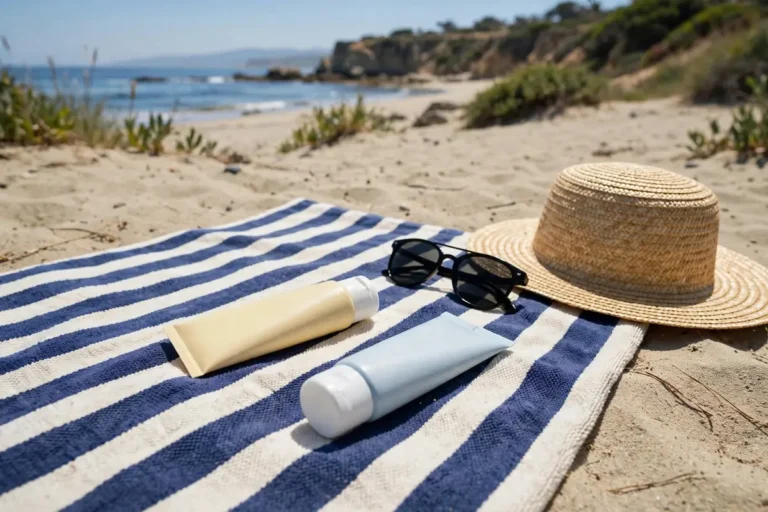
Sunscreen is the step most likely to slip. You are outdoors more on holiday, often somewhere sunnier than home, and reapplying is easy to forget. Keeping a small tube in your day bag, next to your phone or wallet, makes it more likely you will use it. Our guide to what SPF numbers mean covers what to look for on the label.
Evenings can be short: cleanse, moisturize, sleep. If you are tired enough to skip it entirely now and then, a missed night won’t undo anything.
Before you leave, do one small thing: lay out the bottles you would take, then put back anything you haven’t used in the past month. What remains is your travel kit.
If your skin reacts badly while you’re away, with a rash, swelling, blistering or a burn that doesn’t settle, stop the product you suspect and see a local pharmacist or doctor rather than waiting until you get home.
Build Around a Stable Core Routine
The most effective travel skincare is not a new routine but a stripped-down version of the one that already works at home. Travel exposes skin to recycled cabin air, shifting climates, new water, disrupted sleep, and long hours of sitting. That is exactly when skin needs familiarity, not experiments. Dermatology guidance consistently favors a simple, consistent regimen that protects the skin barrier over trying new products in response to every change in environment.
A practical travel core has four pieces: a gentle cleanser, a hydrating serum or essence, a moisturizer that suits your destination, and a broad-spectrum sunscreen. Everything else is optional. A single active you already tolerate, such as a mild retinoid or one exfoliant, can travel with you if you want, but this is not the moment to start a new acid routine or a stronger retinol. Keep the morning stripped to cleanse, hydrate, protect, and the evening to cleanse, treat lightly, and moisturize.
Adapting to Climate Without Overhauling
A humid destination usually means lighter textures and less layering, while dry climates and air-conditioned hotels call for richer moisturizers and extra hydration steps. Rather than carrying two full routines, bring one versatile moisturizer plus a hydrating serum that can be layered more heavily when needed. If your usual moisturizer is seasonal, this is also a good moment to read up on how day and night moisturizers differ, since a slightly richer night formula often doubles as a travel-day saver.
Packing Smart: The Travel Kit
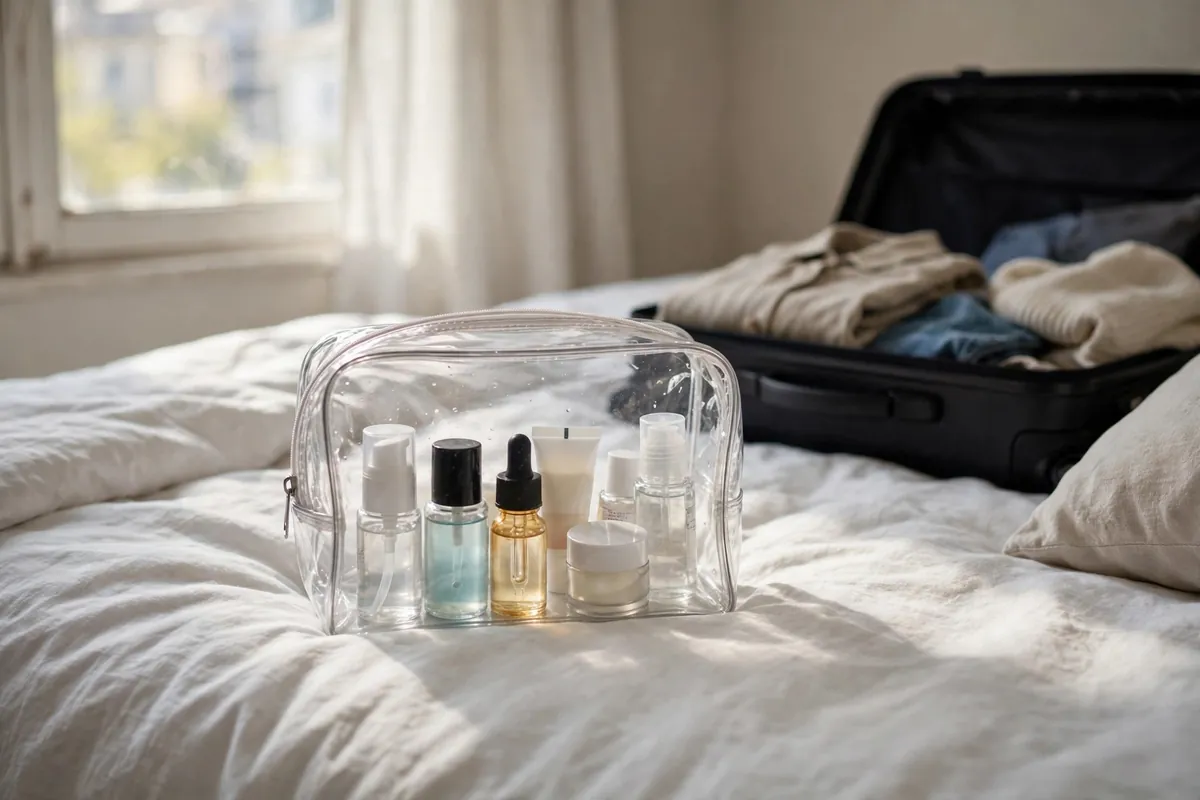
Travel-friendly packing is part skincare, part logistics. Transfer products into small reusable containers or choose minis of products you already use. Avoid decanting unfamiliar products at the last minute, since a leak or mislabeled bottle causes more trouble than it is worth. Keep a permanent travel kit ready if you travel often: a small pouch with cleanser, serum, moisturizer, sunscreen, and lip balm that you restock after each trip.
The 3-1-1 Liquids Rule
For air travel, the TSA’s 3-1-1 rule governs liquids, gels, aerosols, creams, and pastes: each container must be 3.4 ounces (100 milliliters) or smaller, all containers must fit in one clear quart-sized zip-top bag, and each passenger is allowed one such bag. The official TSA liquids rule page lists exactly what counts, and sunscreen, cleanser, and moisturizer all do. Leave a half-inch of headroom in each bottle, since cabin pressure can force contents upward, and keep the liquids bag somewhere accessible for screening. Solid formats like cleansing balms in stick form, powder sunscreen, and bar cleansers can sidestep the liquids limit entirely.
Protect Products From Heat and Light
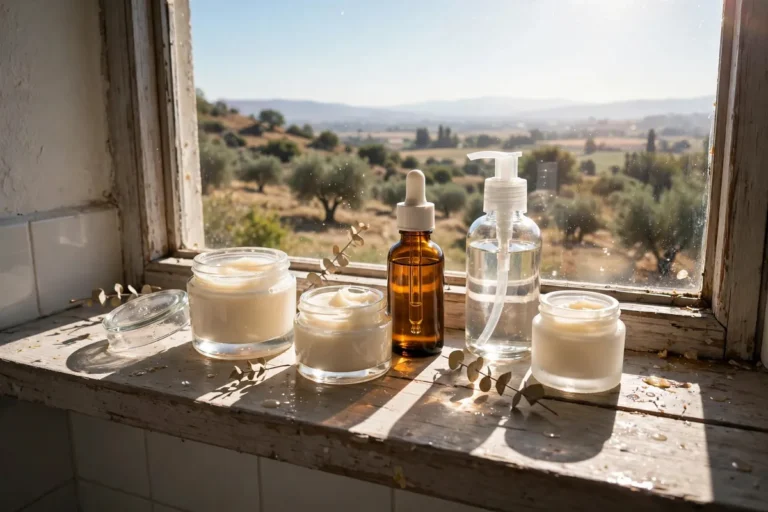
Travel adds hazards that home bathrooms do not. A bag left in a hot car, a hotel windowsill in full sun, or a beach tote can degrade active ingredients fast. Heat and light break down vitamin C, retinoids, and sunscreen actives, quietly reducing their effectiveness. Sunscreen in particular should never bake in a hot car, since reduced effectiveness may not be visible but still leaves you less protected. Our guide to skincare storage mistakes explains what heat and light do to common products, and the same rules apply on the road. Keep the kit in your bag or hotel room, away from direct sun.
Skincare During the Flight
Airplane cabins are notoriously dry, and long flights can leave skin feeling tight and uncomfortable. Board with clean, moisturized skin and avoid heavy actives before and during the flight. A hydrating mist or a light reapplication of moisturizer mid-flight helps on longer trips, and lip balm is essential since lips dehydrate quickly in cabin air. Wash your face after landing rather than trying to run a full routine in the airplane bathroom. Once at your destination, return to your familiar routine and give your skin a day to adjust.
What to Avoid While Traveling
- Starting new products or stronger actives mid-trip.
- Over-exfoliating to compensate for how your skin feels in a new climate.
- Skipping sunscreen because it is cloudy, you are in transit, or you are indoors near windows.
- Using harsh hotel soaps on your face instead of your own cleanser.
- Touching your face frequently during travel days.
Frequently Asked Questions
How do I make a skincare routine work for travel?
Start with your home routine and strip it to the essentials: cleanser, hydrating serum, moisturizer, sunscreen, and lip balm, plus one or two trusted treatments. Five to seven items cover nearly every trip; anything beyond that adds weight and decision fatigue without much benefit.
Can I bring full-size sunscreen in my carry-on?
No. Containers must be 3.4 ounces or smaller in a carry-on. Transfer sunscreen to a travel container or buy a travel-size version; larger bottles go in checked luggage.
Should I change my routine for a different climate?
Adjust the texture, not the routine. The same products in lighter or heavier applications usually suffice. Give your skin a day or two to settle before deciding anything needs changing.
Is it safe to try new products on vacation?
It is risky. A reaction, irritation, or breakout far from home is difficult to manage, and you cannot easily replace products. Introduce anything new at least two weeks before a trip.
Do I need sunscreen on the plane?
Yes, especially by a window. UVA rays penetrate airplane windows, and flights add meaningful UV exposure over time. Apply sunscreen before boarding if you will sit by the window.
Conclusion
A travel skincare routine that holds up is a simple one: a familiar core of cleanse, hydrate, moisturize, and protect, packed to meet the 3-1-1 rule and protected from heat and light. Resist the urge to experiment mid-trip. For more routine-building guidance, browse All Day Health & Fitness.