What Makes a Moisturizer Different for Day Versus Night
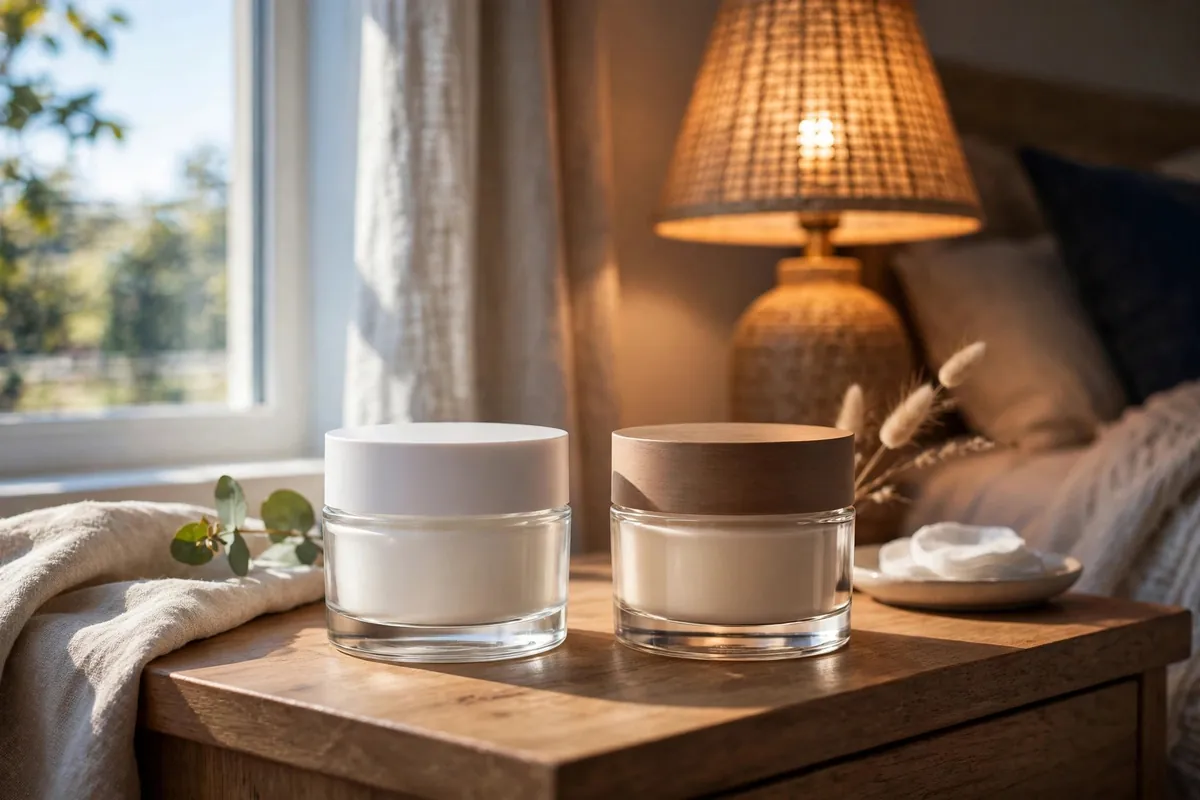
For most people, the difference between day and night moisturizer is sunscreen and texture. A day cream is usually lighter and often contains SPF, while a night cream is usually richer and skips SPF because there is no sunlight to block. Whether you need both depends on your skin, not on the product range.
Plenty of people use one moisturizer morning and night and add a separate sunscreen in the morning. That is a perfectly good routine.
Day vs night moisturizer, side by side
| Day moisturizer | Night moisturizer | |
|---|---|---|
| Texture | Lighter, absorbs quickly, sits well under makeup | Often thicker and richer |
| Sun protection | Often includes SPF | Usually none |
| Typical extras | Antioxidants, a matte or dewy finish | Extra emollients; sometimes retinoids or acids |
| Main job | Hydrate and protect during the day | Reduce overnight water loss and support the skin barrier |
Why night creams tend to be richer
Skin loses some water overnight, and a heavier cream can help slow that down. Richness also matters less at night, because nobody is putting makeup on top of it and a slight shine on the pillow is not a problem. For people with dry skin, a thicker night layer can make a real difference to how their skin feels in the morning. For people with oily or breakout-prone skin, a heavy night cream may feel greasy and isn’t necessary; a light, non-comedogenic moisturizer is often enough.
The ingredient that deserves a warning
Some night creams contain retinoids or exfoliating acids. These are kept for evening use partly because some of them break down in sunlight and partly because they can make skin more sensitive to the sun. If your night product contains one, daily sunscreen matters even more. Introduce it slowly, patch test first, and follow the label. If you already use a prescription skin treatment, check with your dermatologist or pharmacist before adding a night cream with actives, as doubling up can irritate. Our explainer on what retinol does covers why.
Do you need two products?
Probably not, if:
- your skin feels comfortable with one moisturizer all day and overnight,
- you already wear a separate broad-spectrum sunscreen each morning, and
- you aren’t using night-time actives that call for a more soothing layer.
Two products may be worth it if your skin is dry enough to want something heavier overnight but you dislike that texture in the daytime, or if you prefer the convenience of a moisturizer with built-in SPF in the morning. If you go that route, apply enough of the SPF moisturizer to be protected; see our piece on chemical versus mineral sunscreen for how the filters differ.
Whatever you choose, the basic test is how your skin feels. The American Academy of Dermatology’s tips for relieving dry skin are a good reference if you are choosing a night cream for dryness.
One caution to finish: a night cream won’t repair persistent cracking, itching or flaking. If a richer moisturizer doesn’t settle those within a couple of weeks, see a dermatologist or your doctor.
You don’t always need two products
The skincare industry benefits when you buy two moisturizers, which is worth remembering. A single well-chosen moisturizer plus a separate sunscreen in the morning covers what most skin needs. The second product is an upgrade for comfort or convenience, not a requirement for healthy skin — so if your budget or shelf space says one, one is fine.
Apply enough when SPF is built in
A day moisturizer with SPF only protects as well as the amount you actually apply. Most people use far less moisturizer than the amount sunscreen testing is based on, which means the SPF number on the jar overstates the real-world protection. If your morning moisturizer is your only sun protection, be generous with it — or layer a dedicated sunscreen over the top and stop worrying about it.
Your Skin Runs on a Schedule
Separate day and night moisturizers start from a real biological fact: skin behaves differently across the 24-hour cycle. By day it is in defense mode against UV, pollution, temperature swings, and makeup. At night, with those assaults paused, it shifts toward repair: cell turnover peaks during sleep and blood flow to the skin increases. Night also brings a challenge, because transepidermal water loss, the quiet evaporation of moisture through skin, measurably rises in the evening. The same skin that needs light protection at noon needs a stronger moisture seal at midnight, and that difference is the entire logic behind two formulations.
What a Day Moisturizer Is Built to Do
A day moisturizer serves two masters: your skin and everything layered on top of it. Texture comes first. It must be light and fast-absorbing, because a heavy cream pills under sunscreen and slides under foundation. Silicones like dimethicone are common here precisely because they give slip and a smooth finish without weight. Protection is the second job: a good day formula includes broad-spectrum SPF 30 or higher or layers cleanly under separate sunscreen, and many carry antioxidants such as vitamin C, vitamin E, or niacinamide to defend against daylight environmental stress. The design brief is simple: hydrate lightly, defend actively, disappear cosmetically.
What a Night Moisturizer Is Built to Do
Night formulas ignore everything that constrains a day cream. Nobody minds a slow-absorbing texture while asleep, so they run richer, with more emollients and occlusives like shea butter, squalane, and ceramides to build the overnight seal. With no sun to fight, formula space goes to ingredients that work best in the dark. Retinoids break down in UV and raise sun sensitivity, so they belong in the evening by chemistry and common sense, alongside peptides, stronger exfoliating acids, and intensive barrier-repair complexes. If you are curious about the most famous nighttime active, our plain-language guide to what retinol does explains how it works and how to start safely.
Do You Actually Need Two?
The honest answer depends on your skin, not on a rule. If your current moisturizer keeps skin comfortable morning to night, you do not need a second product. A good skin care routine is not measured by step count; it is measured by whether you actually do it every day. A night cream earns its place in specific situations: skin that feels tight, flaky, or dull by morning, a desire to use retinoids or strong actives, or winters that demand a richer seal than summer. If you already use a rich, heavy moisturizer day and night, adding another rich cream on top usually adds little. Choosing the right single formula is a skill in itself, and our guide to choosing a moisturizer for your skin type walks through matching texture and ingredients to your skin.
Common Mistakes With the Split
The biggest mistake is treating a day moisturizer with SPF as full sun protection while applying half the needed amount; the labeled SPF assumes a generous layer most people never use. Another is putting strong actives in the wrong slot, like a retinol cream in the morning, which wastes the ingredient and invites irritation. At night, layer watery treatments first and the richer cream last, since occlusives seal in whatever sits beneath them. Packaging matters too: pumps and opaque tubes keep light-sensitive actives stable longer than open jars. And give any new night cream four to six weeks before judging it, since skin’s renewal cycle sets the pace. The American Academy of Dermatology’s product-selection guidance reinforces the same fundamentals: sunscreen and moisturizer first, actives second, patience throughout.
Frequently Asked Questions
Can I use night cream during the day?
You can, but it is rarely ideal. Night creams are richer, slower to absorb, may sit poorly under makeup, and contain no SPF, so separate sun protection is still needed.
Can I use my day cream at night?
Yes, and many people do fine with it. You simply miss the richer seal and nighttime actives of a dedicated formula. If skin wakes up comfortable, your day cream is doing enough.
Is a night cream just a marketing trick?
Not entirely. The texture, ingredient, and SPF differences are real formulation choices tied to how skin behaves at night. But the benefit is incremental, and plenty of people do well with one good moisturizer twice daily.
Do I need a night cream if my skin is oily?
Not necessarily, but do not skip nighttime moisture. Oily skin often does well with a light gel night formula focused on humectants and barrier support rather than heavy occlusives.
How do day and night moisturizers fit into a good skin care routine?
Think of the classic order. Morning is cleanse, day moisturizer, sunscreen. Night is cleanse, any treatment serums, then night moisturizer. That simple framework, protect by day and repair by night, answers the routine question for most people; adjust it only when your skin asks you to.
Conclusion
Day and night moisturizers differ because your skin’s job changes when the sun goes down: light protection and cosmetic elegance by day, a richer seal and repair-friendly actives by night. Whether you need both, at any age, is a question your skin answers for you. Start with one well-chosen moisturizer, add a night formula only if mornings say something is missing, and keep the fundamentals ahead of the jar count. For more skincare guides in plain language, visit the All Day Health & Fitness homepage.