What Makes Lip Balm With SPF Worth Using Daily
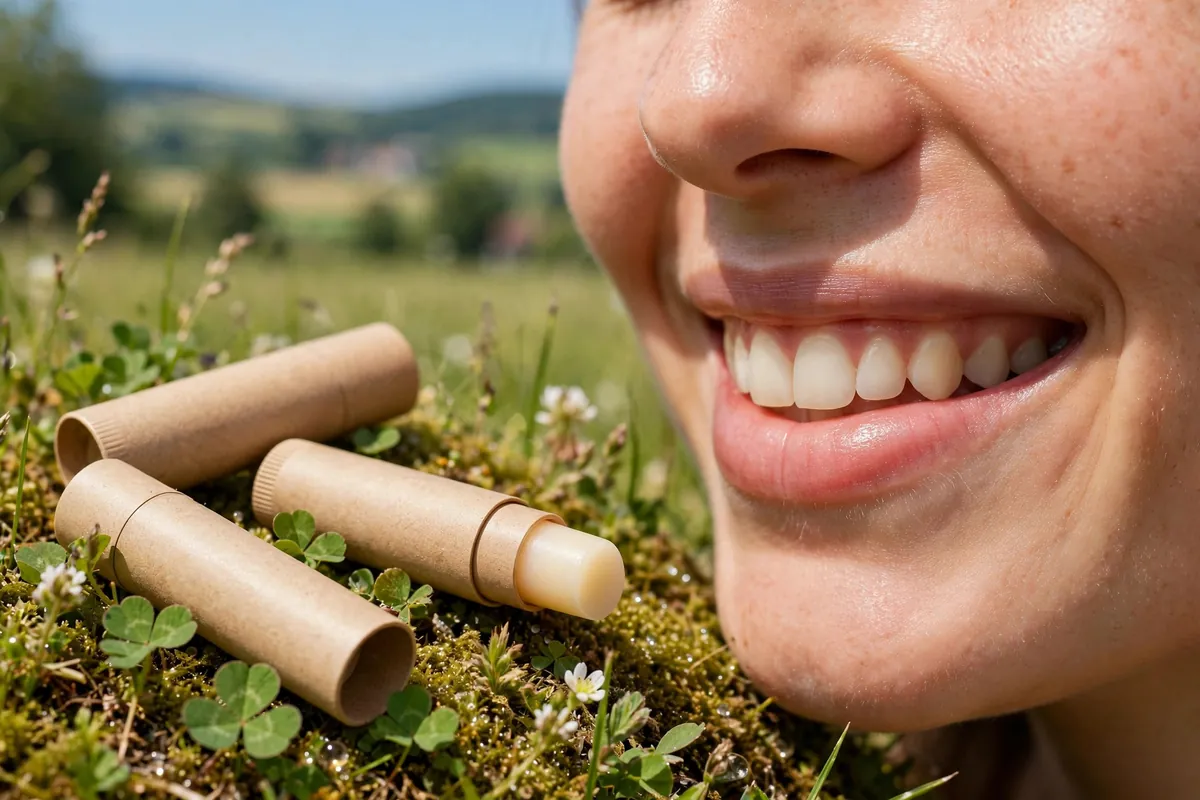
Yes, it is worth it for most people. Lips get as much sun as the rest of your face, they have very little natural protection, and ordinary sunscreen tends to get skipped around the mouth, so a lip balm with SPF closes a gap that most routines leave open.
The benefits of lip balm with SPF are mostly about what it prevents. Lips can sunburn, and sunburned lips crack, peel and sting. Over the years, sun exposure also adds up on lips the same way it does on the nose and cheeks. The American Academy of Dermatology notes that dry, chapped lips burn more easily, and that sun can trigger cold sores in people who get them.
What to look for in a lip balm with SPF
The AAD’s tips for healing dry, chapped lips recommend a non-irritating balm with SPF 30 or higher before going outdoors, including in winter. Beyond that, a few label checks help:
- Broad spectrum on the label, so it covers both burning and ageing rays. Our explainer on what SPF numbers mean covers the difference.
- Mineral or chemical filters. Zinc oxide and titanium dioxide are common in balms for sensitive lips; the trade-offs are the same as for face sunscreen, covered in our comparison of chemical and mineral sunscreen.
- Fewer irritants. Fragrance, flavorings and ingredients that tingle or cool can irritate lips that are already dry. If a balm stings, try a plainer one.
Tinted balms and lipsticks that list an SPF count too. A clear gloss without SPF offers no meaningful protection, so if you like gloss, wear an SPF balm underneath it and reapply both through the day.
Making it a habit
The hardest part is remembering. Lip balm wears off quickly with eating, drinking and licking your lips, so one application in the morning doesn’t carry you through a day outside. The easiest fix is to keep one where you will see it: in your jacket pocket, your bag, your car, or next to your keys.
Put it on before you head out, not once you are already in the sun, and reapply after meals and whenever you have been outside for a while. On days spent at the beach, on the slopes or on the water, reapply more often; snow and water reflect sunlight back up at your face.
Don’t forget the lower lip in particular. It sticks out a little further and catches more direct sun, so give it a full, even coat rather than a quick swipe across the middle.
At night, a plain, thick balm or petroleum jelly is enough. SPF isn’t needed in the dark, and a simple ointment seals in moisture while you sleep.
One caution: if you have a sore, crust or rough patch on your lip that doesn’t heal within a few weeks, or a spot that bleeds without a clear reason, have a dermatologist or your doctor look at it rather than covering it with balm.
For everyone else, the next step is small: buy one balm with SPF 30 or higher that you like the feel of, and put it where you keep your keys.
Why Lips Need Sun Protection Too
Lips are easy to forget when you reach for sunscreen, yet they are some of the most sun-exposed skin on the entire body. Lip skin is noticeably thinner than the skin on your cheeks, it contains very little melanin, and it has almost no oil or sweat glands to support its natural defenses. That combination means UV light reaches lip tissue with very little resistance, and damage builds up quietly over years of daily exposure.
Dermatologists point out that the lower lip is especially vulnerable because of how it angles upward and catches direct sunlight. Repeated sun exposure is linked to dryness, peeling, darkened lip color, and early visible aging around the mouth. With enough cumulative exposure, the lips can develop actinic cheilitis, a rough, scaly condition considered a precancerous change, and skin cancer can also develop on the lips. That is one reason the American Academy of Dermatology specifically recommends protecting them.
How Lip Damage Builds Up Over Time
Most lip sun damage is cumulative and painless. A morning walk, the drive to work, and weekend hikes each add small amounts of UV exposure, and lip balm wears off quickly, so lips often sit unprotected for hours. Over time, that steady exposure contributes to the dryness, cracking, and pigmentation changes many people notice on their lips as the years pass.
How to Choose an SPF Lip Balm
Not every lip balm with SPF offers the same level of protection, and the label is worth reading. The AAD recommends a broad-spectrum, water-resistant lip balm or lipstick with an SPF of 30 or higher. Broad-spectrum covers both UVA rays, which drive premature aging, and UVB rays, which cause sunburn. If the SPF number on the tube confuses you, our guide to what SPF numbers actually mean explains how to read these ratings.
What to Look for on the Label
- Broad-spectrum SPF 30 or higher: the AAD’s recommended minimum for lips.
- Moisturizing ingredients: beeswax, shea butter, squalane, or petrolatum to keep lips comfortable through reapplication.
- Fragrance-free if your lips are reactive: flavoring and fragrance are common irritants on sensitive lips.
- Water resistance: helpful if you are swimming, sweating, or eating outdoors.
- An expiration date: sunscreen actives degrade over time, and a tube carried through two summers may no longer perform as labeled.
Mineral Versus Chemical Filters on Lips
SPF lip balms use the same two families of UV filters as facial sunscreen. Mineral filters like zinc oxide and titanium dioxide deflect UV, while chemical filters such as avobenzone absorb it. Mineral balms can leave a slight white cast or thicker feel. Chemical filters feel lighter but can irritate very sensitive lips. Neither type is categorically better for lips; choose whichever you will actually reapply.
Making Daily SPF Lip Balm a Habit
Keep a tube where it is easy to reach: in a pocket, a desk drawer, or next to your car keys. Apply it as the last step of your morning routine and again before heading outside. Many people who apply facial sunscreen carefully still skip their lips, so a dedicated tube makes the habit visible.
How Often Should You Reapply?
Lip balm wears off fast, through eating, drinking, talking, and licking. As a practical rule, reapply every two hours when you are outdoors, and sooner after swimming, sweating, or meals. Indoors on a normal workday, once in the morning plus a touch-up after lunch is a reasonable routine. Keep in mind that one quick swipe rarely gives full coverage; as our guide to common sunscreen application mistakes explains, under-application is one of the biggest reasons sunscreen underperforms. Watch for signs of sun-related lip damage over time, including persistent dryness, rough scaly patches, or uneven coloring that does not fade. These are worth mentioning to a dermatologist, who can distinguish everyday dryness from actinic cheilitis.
Frequently Asked Questions
Is SPF 15 lip balm enough for daily use?
SPF 15 gives some protection, but dermatology guidance, including the AAD, recommends SPF 30 or higher for lips. Given how quickly lip balm wears off, the higher number provides a useful margin of safety.
Can I just wear my regular lipstick instead?
Regular lipstick without labeled SPF offers no reliable sun protection. If you prefer color, look for a tinted lip balm or lipstick with a stated SPF 30 rating, or layer a clear SPF balm underneath.
Does SPF lip balm need reapplication indoors?
For a day spent mostly indoors away from windows, one morning application is a sensible baseline. UV passes through window glass, so if you sit near a window or drive a lot, an extra midday application is worth it.
Is lip balm with SPF safe to use every day?
Yes. Daily use of a lip balm with labeled, unexpired SPF is a routine part of sun protection. If your lips sting, switch to a fragrance-free formula rather than abandoning SPF.
Can sunscreen on my face cover my lips too?
Technically yes, but most people avoid getting sunscreen on their lips because of the taste. A dedicated SPF lip balm gives better coverage with a formula designed for the mouth area, which is why dermatologists recommend it as a separate step.
Conclusion
Lips get plenty of sun and very little natural protection, which makes a daily SPF lip balm one of the simplest upgrades in any routine. Choose a broad-spectrum SPF 30 or higher, reapply through the day, and retire old tubes past their expiration date. For more everyday guidance, explore All Day Health & Fitness, and for a closer look at how daily sun protection habits stack up across the population, see the AAD’s survey on sunscreen habits and skin aging.