Choosing a Foundation Shade Online Without Testing in a Store
You can get close to the right foundation shade online by working out two things first: your undertone and how light or deep your skin is. With those, plus a shade you already know suits you, choosing a foundation shade online becomes far less of a gamble.
Start with undertone, because it is what makes a shade look right or wrong even when the depth is close. Undertone is the color beneath the surface of your skin, and it is usually described as warm, cool or neutral, with olive sometimes listed as its own category. It doesn’t change with a tan the way depth does.
Choosing a foundation shade online starts with undertone
A few rough checks help, and it’s worth doing more than one, in daylight near a window rather than under bathroom lights. Look at the veins on the inside of your wrist: if they look more green, you likely lean warm; more blue or purple suggests cool; hard to tell usually means neutral. Think about which jewelry you reach for, since gold tends to flatter warm undertones and silver cool ones. And notice how your skin behaves in the sun: people who tan easily often lean warm, those who burn quickly often lean cool. None of these is definitive, but when two or three agree you have a reasonable starting point.
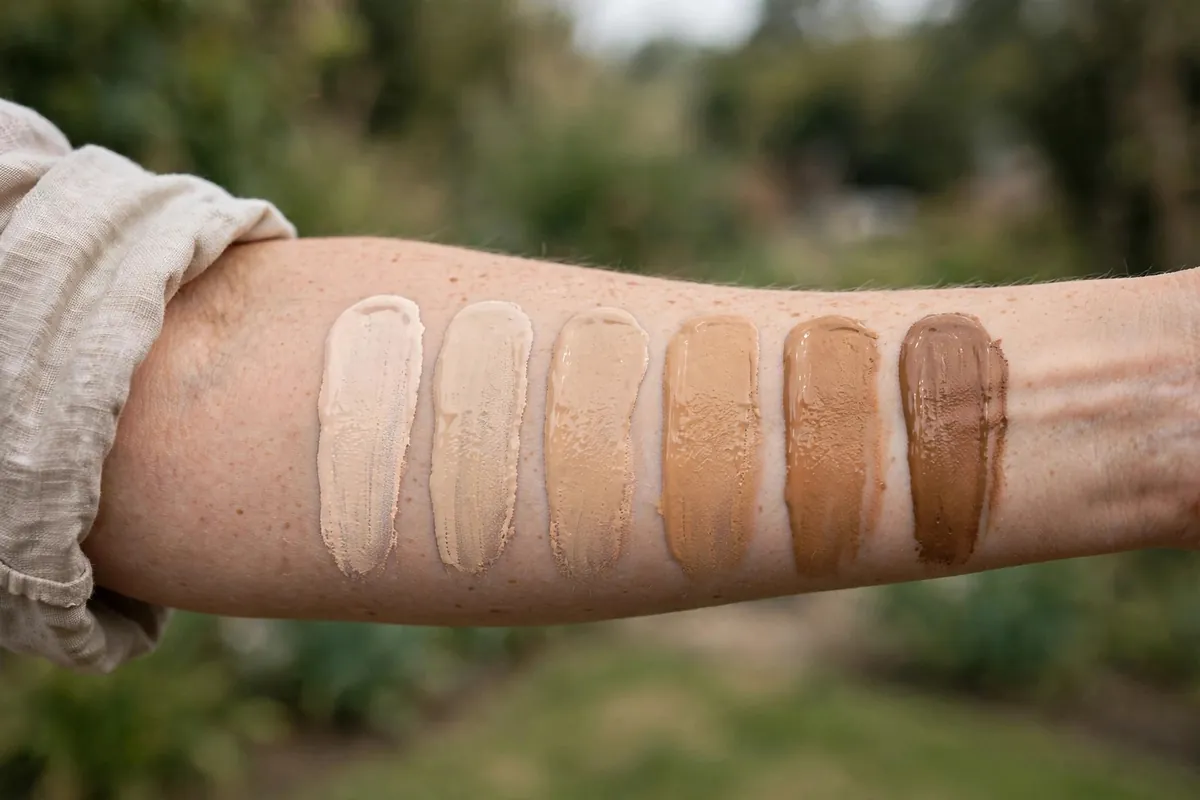
Depth is simpler. Most brands group shades as fair, light, medium, tan and deep, then number them within each group, with the letter or word after the number showing undertone. Read the brand’s own shade guide, because one brand’s light can be another’s medium.
The most reliable shortcut is a shade you already own. Many brands and retailers offer shade-matching tools or comparison charts that let you enter a foundation you know works and suggest the nearest equivalent. Customer photos in natural light, from people who say their skin is like yours, are more useful than studio swatches.
Match to your jaw or neck rather than your cheek or the back of your hand, since the face is often a little redder or more tanned than the neck. Your skin may shift between seasons too, so the shade that matched in winter may look off by late summer. Some people keep two shades and mix them.
Before you buy, check the returns policy. Several retailers accept opened foundation if the shade is wrong, which takes most of the risk out. Sample sizes, where offered, are even better.
When it arrives, try it on your jawline in daylight and let it sit for a few minutes, since some formulas darken slightly as they settle. Foundation is also a new product on your skin, so the American Academy of Dermatology’s advice on how to test skin care products applies here too, especially if you are prone to breakouts or reactions. Our step-by-step guide to patch testing a new product walks through it.
A foundation labeled with SPF is a bonus, not a replacement for sunscreen, because few people apply enough of it to get the protection on the label. Our explainer on what SPF numbers mean covers why.
If a new foundation leaves you with a persistent rash, itching or swelling, stop using it and check in with a dermatologist or pharmacist.
Decoding shade codes and numbers
Shade names are marketing. The code beside the name is the useful part, and most brands build it the same way: a number for depth and a letter for undertone. A number like 20 usually means lighter, 40 or higher deeper, while W, C or N tells you whether the base leans warm, cool or neutral. Brands calibrate differently though, so a 2W in one line can be a full step away from a 2W in another. Check the brand’s own shade chart before assuming a code carries over.
When you are comparing two shades online, hold them against the undertone you worked out earlier rather than against your wrist or a photo of the bottle. If you lean cool and the code says warm, skip it no matter how close the depth looks.
Shade is only half the match: finish and coverage
A shade that is technically right can still look wrong if the finish fights your skin. Matte formulas tend to read a little deeper once they set, while dewy finishes reflect light and can make the same depth look lighter. If you prefer a luminous finish, lean one shade lighter than your usual matte pick.
Coverage changes the equation too. A sheer tint blurs into your own skin tone and forgives a slightly off shade; a full-coverage foundation sits on top and shows every mismatch. For a first online purchase, a lighter-coverage formula is the lower-risk way to try a new brand. Whatever you choose, foundation sits on top of your skincare, and a well-matched moisturizer for your skin type helps it go on evenly instead of clinging to dry patches.
Using shade-matching tools and virtual consultations
Comparison tools that cross-reference shades across brands have become the most practical shortcut. You enter a foundation you already wear and get suggested equivalents in the new line. They are not perfect, since formulas differ in depth and undertone even when the numbers match, but they narrow a wall of thirty shades down to two or three sensible candidates.
Many mid-range and premium brands now offer live video consultations or photo-based matching where an advisor checks your skin in daylight. If you use one, book it in natural light with no makeup on and hold your phone at arm’s length, since close-up selfies distort color. Brand shade quizzes that ask about your undertone and current shade can also work well when the range is small and the questions are specific.
Once you have narrowed it down, test each candidate the same way you would a sample: on the jawline in daylight, then live in it for a few hours. Foundation brushes and sponges hold old product and bacteria, so test with freshly washed hands or clean tools. The American Academy of Dermatology’s guide to cleaning makeup brushes is a quick refresher, and it doubles as good hygiene for the rest of your routine.
What to do if the shade arrives slightly off
A shade that is close but not exact is not a failure. If it is a touch too light, wearing it with bronzer on the high points usually balances it out. If it is a touch too dark, mixing it with a little moisturizer sheers it down for summer skin. Only when the undertone is clearly wrong, pulling orange or ashy no matter how you apply it, is an exchange the better answer. That is also why a simple morning skincare routine matters more than people think: foundation applied over sunscreen and moisturizer settles differently than foundation on bare skin, so judge a new shade as part of your real routine, not in isolation.
Frequently Asked Questions
Should I pick a lighter or darker shade when I am between two?
When you are stuck between two shades, the slightly lighter one is usually the safer choice. It is easier to warm up a light foundation with bronzer than to lighten one that is too dark. If your skin tans in summer, consider buying the lighter shade now and a deeper one for later, then mixing them through the shoulder seasons.
Why does foundation look different on my face than in the bottle or swatch?
Three things change the color: oxidation, lighting and your own skin showing through. Many formulas darken as they settle, swatches are shot under flattering light, and your natural skin tone blends with the pigment. Test on your jawline in daylight and wait at least ten minutes before deciding.
Can I match my foundation shade from a selfie?
A selfie can help as a starting point for a quiz or a virtual consultation, but it is not reliable on its own. Phone cameras, indoor lighting and filters all shift color. Use a daylight photo taken at arm’s length without filters, and treat any match it gives you as a shortlist rather than a verdict.
How often should I recheck my foundation shade?
Most people benefit from rechecking twice a year, since skin is usually lighter in winter and deeper in summer. Weight changes, pregnancy and some medications can shift tone too. If a long-reliable shade starts looking mask-like, reassess rather than piling on more product.
Do I really need separate summer and winter shades?
Not everyone does, but it is one of the most common solutions for a reason. A winter shade and a summer shade, mixed in changing ratios through spring and autumn, covers most of the year without guesswork. If you would rather keep one bottle, choose the winter match and use bronzer to adjust when your skin picks up color.
Conclusion
Choosing a foundation shade online is a skill, not a lottery. Learn your undertone, read the shade codes instead of the names, use a known shade as your anchor, and give every candidate a daylight test before it earns a place in your routine. For more everyday guides on skincare, makeup and routines that fit real life, browse the All Day Health & Fitness homepage.