What Makes Micellar Water Different From Regular Cleanser
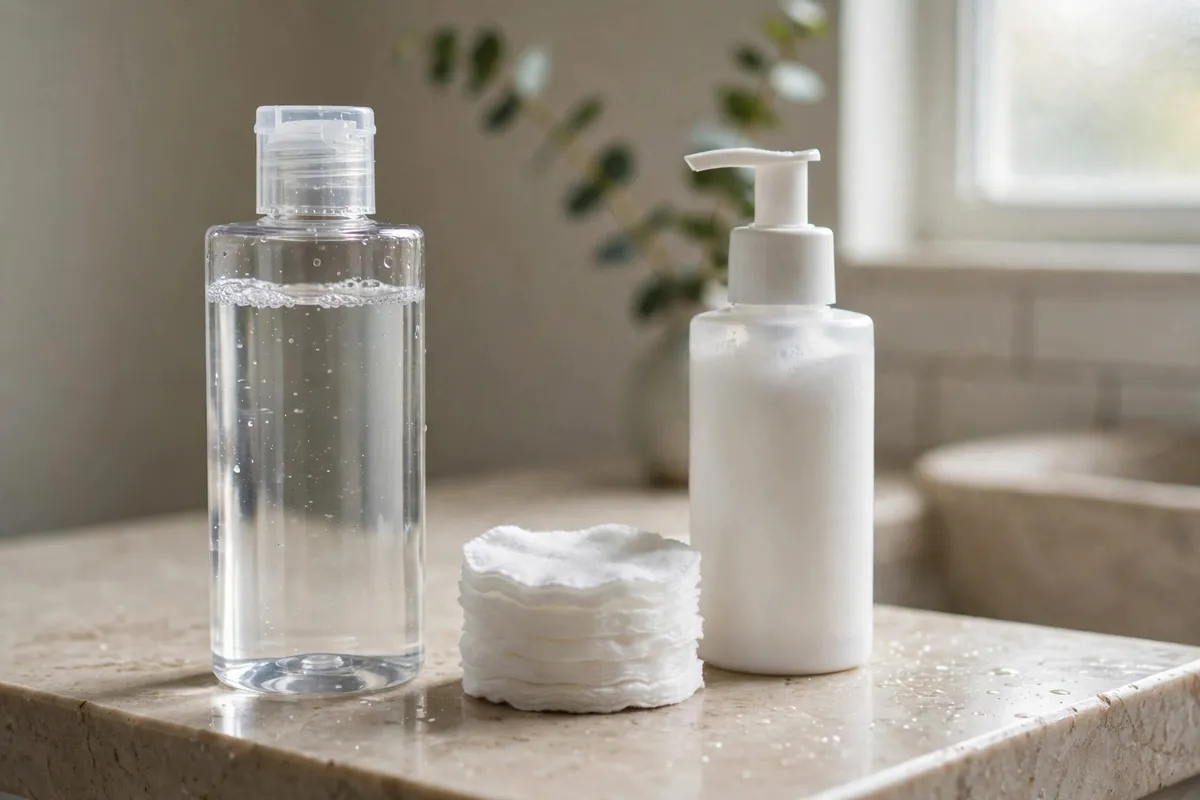
Micellar water is a gentle, no-rinse cleanser: mostly water, plus tiny clusters of mild surfactant molecules called micelles that attract oil, sweat and light makeup. The micellar water vs cleanser question comes down to this: it can stand in for a regular cleanser on easy days, but it has real limits, and knowing them is the difference between a handy shortcut and a routine that leaves residue behind.
Micellar water vs cleanser: how each one works
A standard cleanser, whether it’s a gel, foam or cream, is massaged over damp skin and then rinsed away. The rinse carries off the loosened oil and debris along with the cleansing agents themselves. If you want a refresher on how those formulas compare, our guide to choosing a cleanser for your skin type walks through each one.
Micellar water works differently. You soak a cotton pad, press it against the skin for a few seconds, then sweep. The micelles lift oil and makeup onto the pad rather than washing it down a drain. There’s no lather and, on most labels, no rinse step.
That design is why people reach for it when they’re travelling, freshening up after the gym with no sink nearby, or taking off makeup before a proper wash. It’s also why many people with dry or easily irritated skin like it: there’s less friction from repeated splashing and less time for water to strip the surface.
Where it falls short
For most people, micellar water can’t fully replace a rinse-off cleanser every single night. Here’s why:
- Heavy sunscreen and long-wear makeup. Water-resistant sunscreen and waterproof mascara are built to resist exactly the kind of gentle removal micellar water offers. Some residue usually stays behind.
- Leftover surfactant. Because you don’t rinse, a thin film of the cleansing agents remains on the skin. Most people never notice. Some find it leaves skin feeling tacky or, over time, a little irritated.
- Friction. Scrubbing with a pad to get stubborn makeup off defeats the point of a gentle product. If you need several hard passes, it isn’t the right tool for that job.
- Added fragrance. Many micellar waters are scented. Fragrance is a common irritant, so if your skin is reactive, check the ingredient list first.
A practical middle ground is to treat micellar water as a first step rather than the whole routine. Use it to lift off makeup and sunscreen, then follow with a quick wash using your regular cleanser, or simply rinse your face with lukewarm water to clear away what’s left. On a low-effort evening with no makeup and little sun exposure, micellar water on its own is usually fine.
If you’re trying a new bottle, patch test it on a small area of skin for a few days before sweeping it over your whole face, the same way you would with any new product. Our walkthrough on how to patch test skincare covers the steps. The American Academy of Dermatology’s skin care basics section is also a good plain-language reference on gentle cleansing.
Tonight, try pressing a soaked pad against your closed eyelid for ten seconds before wiping, instead of rubbing. If the pad comes away clean and your skin feels comfortable, micellar water is doing its job. If you notice stinging, persistent redness or dryness that doesn’t settle, stop using it and ask a dermatologist or pharmacist what might suit your skin better.
Micellar water vs cleanser: side by side
The quickest way to see how the two compare is to lay them out next to each other. Neither one is “better” in general; they are built for different jobs.
| Feature | Micellar water | Regular cleanser |
|---|---|---|
| How it works | Micelles lift oil and makeup onto a cotton pad | Surfactants loosen grime, then water rinses it away |
| Rinsing | Designed as no-rinse | Must be rinsed off |
| Cleaning depth | Surface-level | Deeper; reaches sweat, SPF and buildup |
| Best at removing | Light makeup, oil, dust | Sunscreen, long-wear makeup, sweat, pollution |
| Convenience | High: no sink needed | Needs water and a sink |
| Skin feel after | Fresh, sometimes a slight film | Clean; can feel tight if too harsh |
Do you need both?
Most people do benefit from having both on hand, though not necessarily using both every day. Think of micellar water as the quick option and a rinse-off cleanser as the thorough one. The right pick depends on what your skin has been through since the last wash.
When micellar water alone is enough
On a morning when you wake up with clean skin, a few sweeps of micellar water is a perfectly good refresh, and many people with dry or easily irritated skin prefer it to a second full wash. It also earns its place when you are traveling or post-workout with no sink in sight. On a low-effort evening with no makeup and minimal sunscreen, micellar water on its own is usually fine.
When a rinse-off cleanser is non-negotiable
After a day of sunscreen, a sweaty commute or long-wear makeup, reach for the real cleanser. Oily and blemish-prone skin also tends to do better with a proper rinse-off wash as the daily anchor, since it clears buildup that surface cleansing can leave behind. Used together, the two make a simple double cleanse: micellar water first to lift off makeup and SPF, then your regular cleanser to finish the job. If you use micellar water as your morning refresh, a rinse-off cleanser at night keeps the routine balanced, much like a simple morning skincare routine pairs a light start with a thorough evening wash.
Choosing a micellar water that suits your skin
Formulas vary more than the simple label suggests. Fragrance is the biggest differentiator: many micellar waters are scented, and fragrance is a common irritant, so reactive skin should start with a fragrance-free bottle and check the ingredient list. Some formulas add hydrating extras such as glycerin or panthenol, which leave skin feeling softer after the pad comes away.
Technique matters as much as the formula. Press a soaked pad against the skin for a few seconds before sweeping, use fresh pads until one comes away clean, and never scrub at stubborn makeup; if it needs hard rubbing, switch to a dedicated makeup remover or a proper wash instead. The American Academy of Dermatology’s face washing guide is a useful plain-language reference for the gentle approach, whatever product you reach for.
Frequently Asked Questions
Should you rinse your face after micellar water?
Most labels say no rinse is needed, and for many people that is perfectly fine. If the thin film it leaves behind bothers you, a quick splash of lukewarm water after does no harm. People who notice irritation over time sometimes find that a rinse, or switching to a fragrance-free formula, settles things down.
Can micellar water replace a cleanser every day?
It depends on the day. If you wear little or no makeup and minimal sunscreen, many people use it as their only cleanse without issues. If you wear water-resistant sunscreen, long-wear makeup or you have oily skin, a rinse-off cleanser is still needed to get everything off.
Can oily or acne-prone skin use micellar water?
Yes, especially as a first cleanse to take off makeup and sunscreen before the main wash. Just do not let it be the only step on heavy days, since leftover film plus excess oil is not a good combination for congested skin. If breakouts increase, look at the whole routine rather than the micellar water alone.
Is micellar water good for sensitive skin?
It is one of the gentlest cleansing options available, which is why sensitive and reactive skin types often reach for it. Choose fragrance-free, patch test first as you would with any new product, and avoid rubbing; gentle pressing and sweeping is the whole point of the format.
Can I use micellar water in the morning instead of washing my face?
Yes, it works well as a morning refresh, especially for dry or sensitive skin that feels tight after a full wash. Just make sure the evening cleanse is thorough, since micellar water alone in the morning only works if the night routine actually cleared the day off.
Conclusion
Micellar water and regular cleanser are not rivals; they are two tools for different moments. Use micellar water for quick, gentle cleanses and makeup first passes, and keep the rinse-off cleanser for the thorough end-of-day reset. Match the product to the day, and your skin gets exactly the level of cleansing it needs, no more and no less. For more guides that keep skincare simple and honest, visit the All Day Health & Fitness homepage.